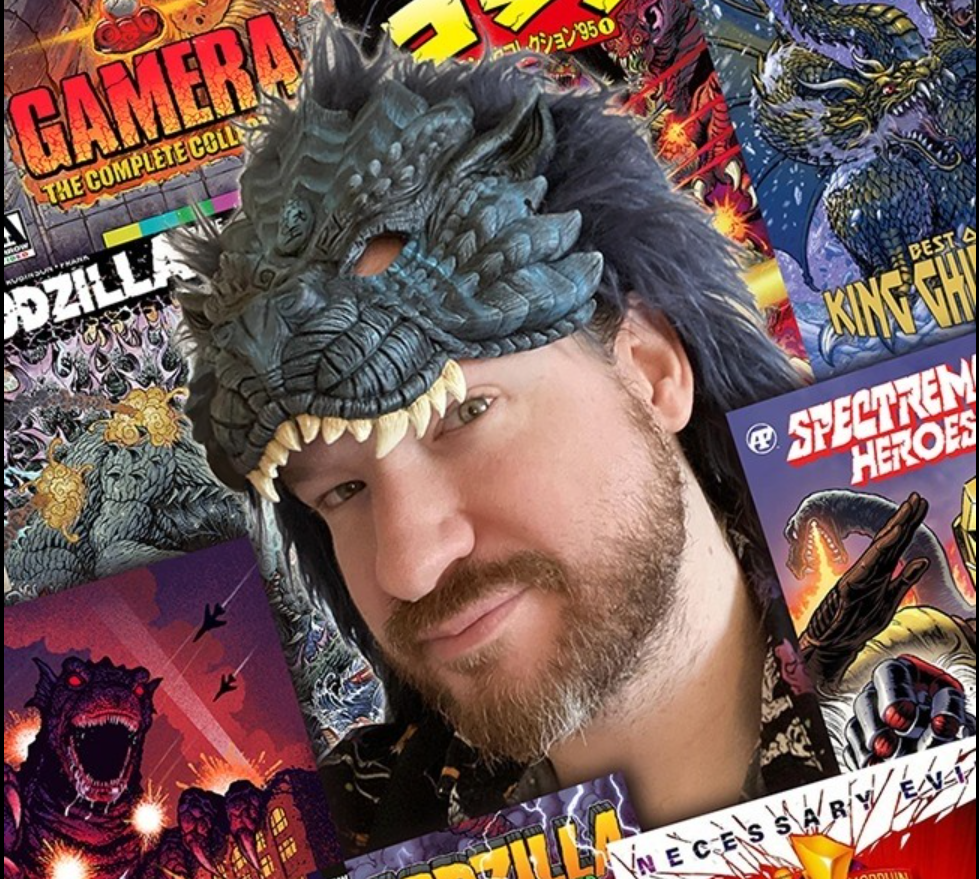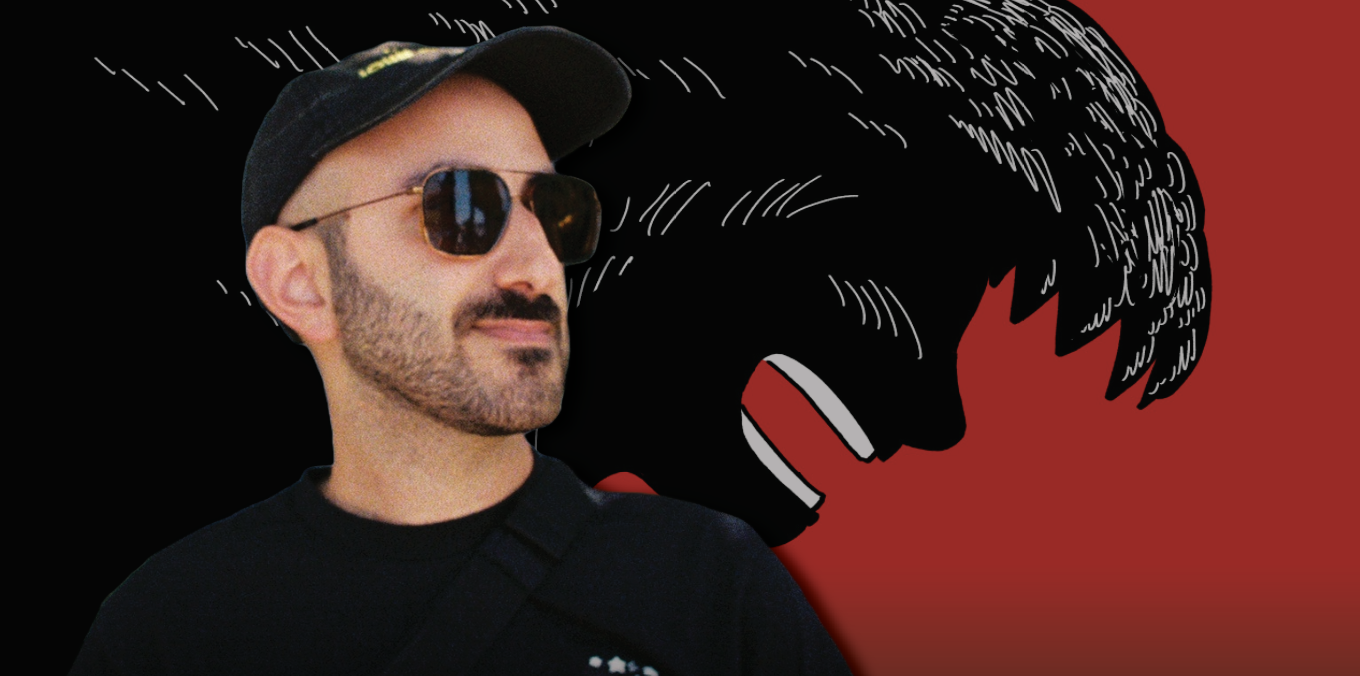
Earlier this week, stop motion live-action hybrid short film Kaiju Kid made its streaming premiere on the Omeleto YouTube channel platform. A labor of love created by self-professed “Godzilla acolytes,” the film sees a sibling rivalry explode into kaiju mayhem. The film is directed by Rusteen Honardoost, who wrote for the Peabody- and Emmy-award winning Apple TV+ series Stillwater. His pilot “Ramona” was selected for the Blacklist’s Bay List, was a finalist for the ATX-Blacklist Writing Program, and was called “dark and frank and funny” by writer/director Jason Reitman (Juno, Ghostbusters: Afterlife). His pilot Down & Out in Tehrangeles was selected for the Blacklist’s MuslimList and as a semifinalist for both the NBC and Disney Writers Programs.
Kaiju Kid has screened at over thirteen film festivals, including at G-FEST XXX’s film fest this summer, culminating in the short taking home the awards for Best Comics-Oriented Film at the San Diego Comic-Con Film Festival and Best Animated Short at the SD Kids Film Festival. After a week of streaming and the short hitting 11,000 views, KU had the opportunity to ask Mr. Honardoost about the short film, his love for Godzilla, and some of the deeper themes behind the film.
KU: This film is made by and for kaiju fans. What do you think makes something specifically targeted towards those fans unique and/or special?
RH: There are a lot of Godzilla parodies out there, but they only ever really use Godzilla as iconography, or poke fun at the special effects. We wanted to hone in on the power fantasy of being a kaiju that is relatable to anyone who grew up with these films, and evoke that sense of childish imagination that is too easy to lose sight of as you get older. I think true kaiju fans can feel that it comes from a place of reverence for these films that mean so much to us (even if they are, yes, a little silly).
KU: Tell us about some of the challenges and limitations with indie filmmaking that hit your production, and how you overcame them.
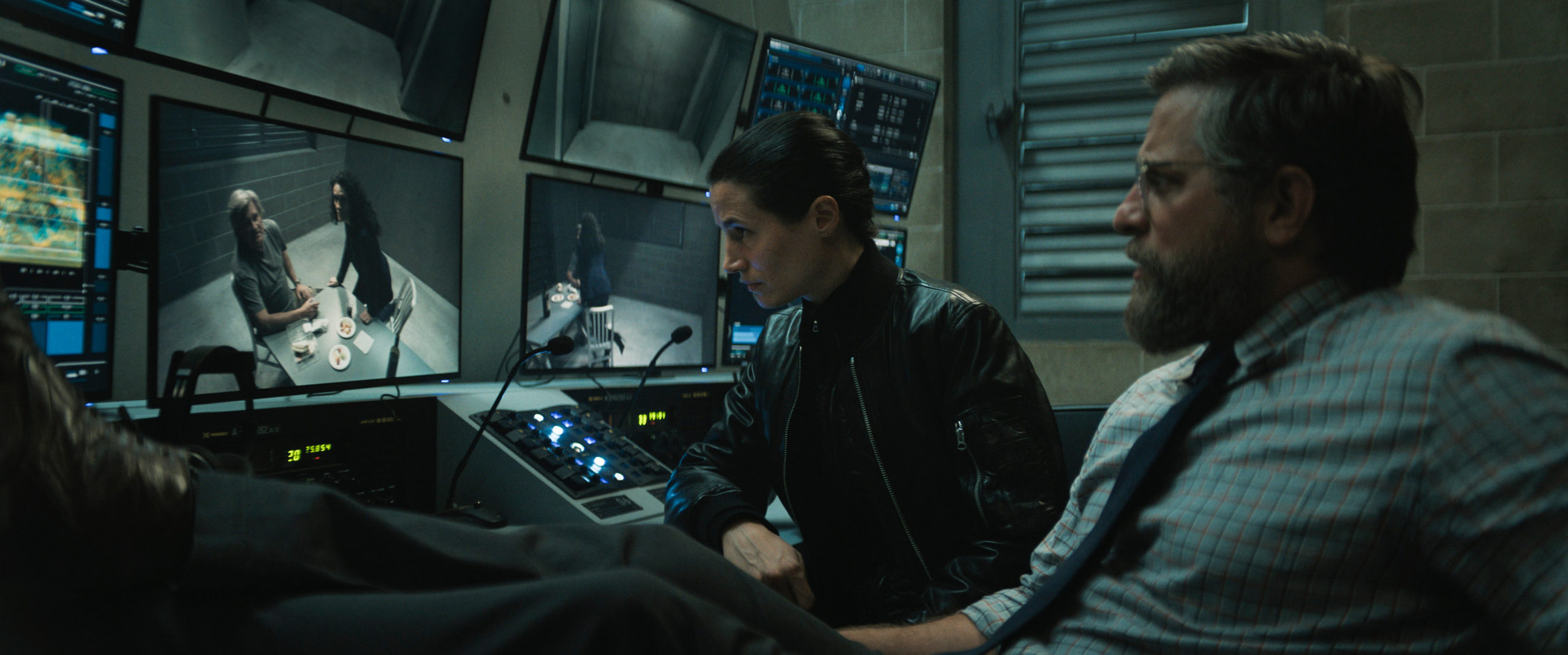
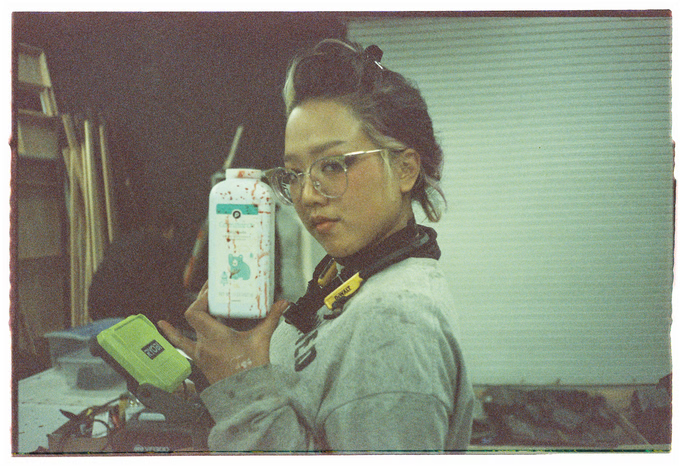
RH: The biggest challenge of any indie film is always time and money. For the animated sequence, we had to make 5 minutes of animation while my animation director Cami Kwan was juggling her full-time work for paying clients at Apartment D at the same time. Likewise for the live-action, we only had one day to shoot 4 pages with two child actors, which may sound like a lot of time, but anyone who’s been on a film set knows that every second counts.
But the truth is that it doesn’t matter how much time and money you have, because it’ll never be enough. So the only way to overcome this obstacle is to over prepare. Cami and I went over every detail in the storyboards to make sure that we knew the purpose of each shot in the film and what emotions needed to be conveyed so that we didn’t have to do any retakes. Likewise for the film shoot, my cinematographer Andrew Daugherty and I were prepped for every possible outcome, and we decided to shoot handheld so that we could react to the kid’s movements without asking them to hit specific marks.
It takes a village to make a film, and none of this would have been possible without a crew you can lean on, so assembling collaborators who you can trust means there is no problem you can’t overcome.
KU: What’s the best piece of filmmaking advice you’ve ever received?
RH: The best piece of advice I’ve ever received is that you are never going to be able to appeal to everyone. When I would tell people that I was making a stop motion kaiju movie, half the time they would say “that’s cute” and move on to another subject. But the other half of the time, their eyes would pop out of their skull and we’d talk for hours about our favorite movies. So don’t chase everyone’s approval. Tell the story that only you can tell, and find the people who want to hear it.
KU: Tell us about screening the film at G-FEST and SDCC. How were the audience reactions at two different events that both celebrate pop culture? What about other film festivals?
RH: We’ve played for 3 types of audiences: fellow filmmakers, Kaiju lovers at G-Fest and SDCC, and for kids as a part of a Family Friendly block. Luckily they all laugh at the same parts, but they do have different reactions to the film. Filmmakers are always curious about the inspiration for the story, and what it was like shooting with kids. The Kaiju lovers at SDCC and G-Fest are the ones who are the most excited by the stop motion, and we swap stories about our favorite films and why they mean so much to us.
But it’s the families who are my favorite audiences, because we are sometimes the first kaiju film they’ve ever seen. The most memorable screening was delayed for technical reasons, and they had handed out sugar cookies to the kids as they walked in, so they were all bouncing off the walls by the time we got to Kaiju Kid at the end of the program. There were two kids right next to me in the back of the theater who were going particularly wild, but when Mr. Kaiju first let out his roar, they both froze in their seats with their mouths wide open, and they watched the whole thing with a stunned amazement at what was happening. The look on their faces was priceless, and made all the stress of making the film worth it.
KU: Is there any specific Godzilla film or media iteration that speaks to you? Any that influenced Kaiju Kid directly?
RH: The original 1954 Godzilla is obviously the fountain from which all of this was born, especially since it’s really the only one to actually employ stop motion effects to animated the kaiju. And while Kaiju Kid took a lot of inspiration from the most kid-friendly iterations of Godzilla movies, like Son of Godzilla, Godzilla vs. Hedorah is probably the film that had the single biggest influence. That groovy 70’s color was a great reference for our animated sequence and we stole a lot of the visual language of the film from there. We also took ideas from Studio Ghibli’s short Giant God Warrior Appears in Tokyo, because that uses a lot of really amazing miniature effects, and it’s where we got the idea for how to depict the tiny people without having to fully animated them.
Outside of that, I love when the kaiju genre is used for political satire and commentary, and so Shin Godzilla remains one of my absolute favorite films of all time, and my wife even got a tattoo of Kamata-Kun while we were at G-Fest XXX.
KU: How long did the stop-motion process take? The sequences are very fluid and smooth.
We spent about 2 months going over the storyboards until we felt ready to move forward with fabricating the puppets and building the sets. When it came time to actually film, Cami was filming Kaiju Kid alongside her other work at Apartment D, and it took another 2 months to shoot the whole thing with some stops and starts in the middle. So we spent just as much time planning how we would execute the stop motion as we spent actually animating it.
KU: What kind of story did you want to tell with Kaiju Kid? It’s got some of that classic sibling bickering, but with a fully realized arc for our Kaiju Kid character. Some KU readers interpreted it as “some of us may want to fantasize about being a destructive kaiju, but that may hurt the people around us that we love.” Was it something along those lines, or more so just a story about being a kid?
RH: There are two halves of Kaiju Kid (obviously): the first is that I, like I’m sure everyone reading this, fantasized about being a giant dinosaur smashing up the city. But I also had a younger brother who I was forced to share my toys with, and he would inevitably destroy them every time, so I knew what it was like to be on the other side of such a destructive force. I wanted Kaiju Kid to reflect that realization, and allow our Mr. Kaiju to go through that transformation himself.
I also thought that it might be a good way to trick the audience and keep them on their toes about what kind of film they are watching: it starts with two kids getting in a fight, with a nostalgic look to it that is pretty common on the festival circuit, but then the door slams shut and all of a sudden we’re in a cutesy cartoon world. As Mr. Kaiju learns how to use his body, you might think you’re watching a Robot Chicken parody, until his violence curdles into genuine, honest-to-god kaiju destruction. What was once fun and playful is now genuine malevolence, until he goes too far and realizes the error of his ways, and we return back to that nostalgic world of childhood that we can all relate to.
At a basic level, yes, it’s a story about being a kid, but a step deeper than that is that the film is about learning how to share and have fun with others. It was important to me that the story isn’t about how his sister hates kaiju and only wants to play with her dolls. She likes dressing up as a big monster and smashing stuff too! But she’s hurt because he broke her things without even including her in the fun. Being a good sibling, and a good person, is about recognizing how to make people feel included, and being humble enough to recognize when you’ve failed at that and that’s the lesson I hope the kids who watch the film walk away with (and also that kaiju are awesome).
Kaiju Kid is now streaming on the Omeleto YouTube channel platform.