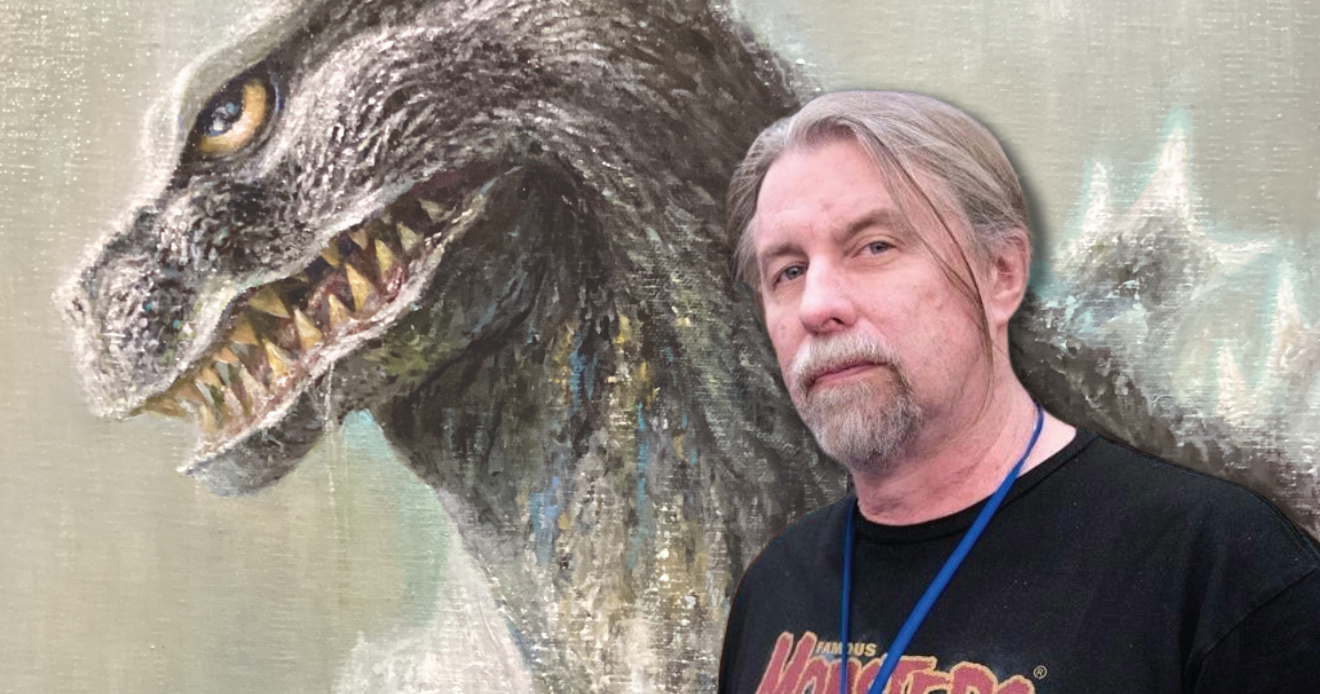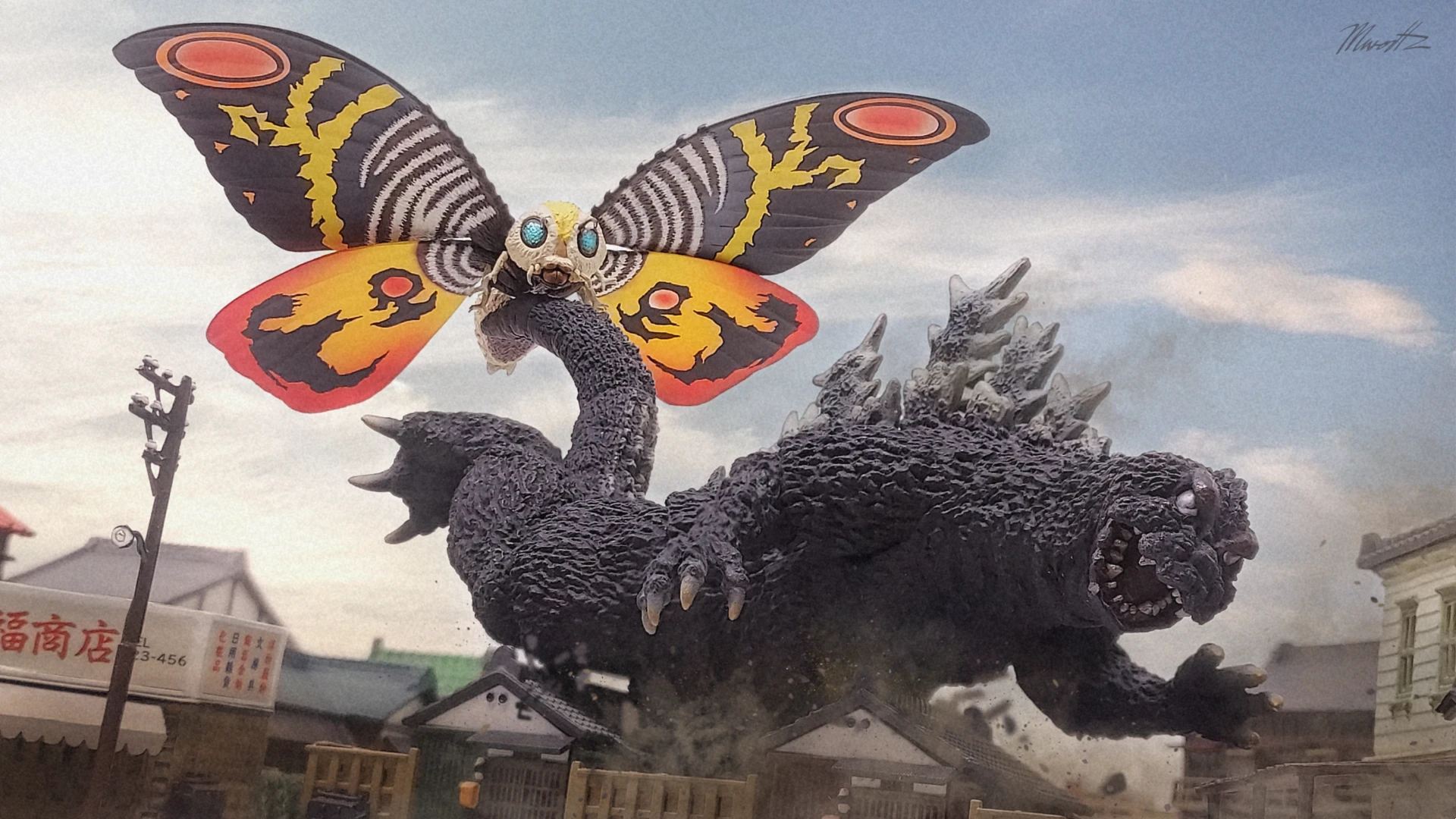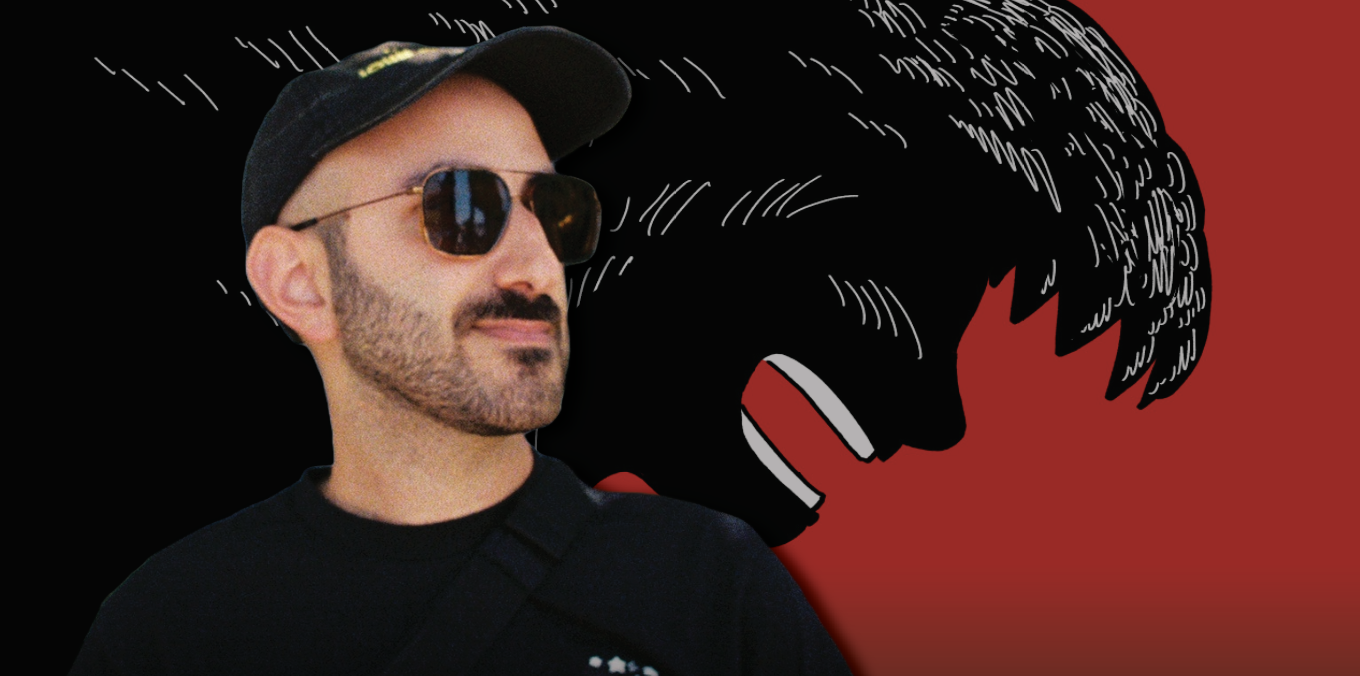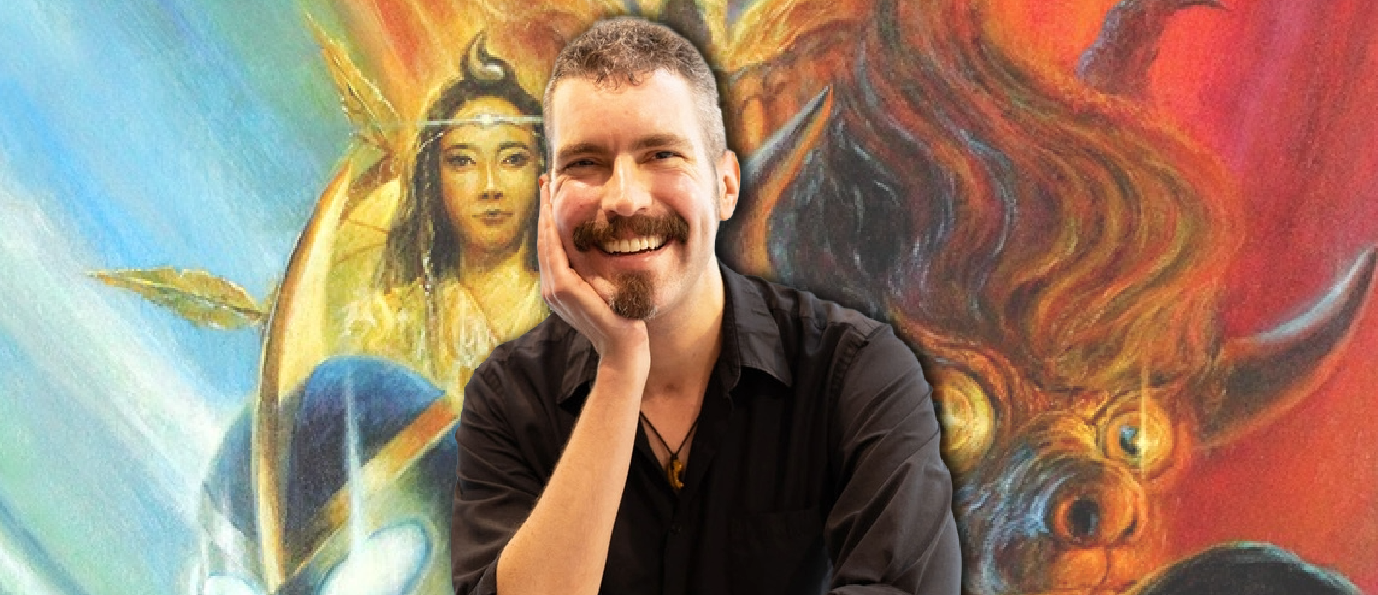
This past winter, I watched and fell in love with an independent tokusatsu film that had been on my radar for quite some time, Iké Boys. Previously, I had seen Bob Eggleton’s lovely theatrical poster art, there was great word of mouth and buzz from my film festival friends, and there was a great deal of promotion for the film at fan conventions during the summer of 2023. After viewing the film for the first time, I came to appreciate just how much heart, love, and passion was packed throughout.
Iké Boys is unlike any other independent tokusatsu film. Woven within is a unique flavor that blends genre film, nerd culture, coming-of-age stories, and heartfelt, spiritual themes of finding yourself. Kaiju United recently had the honor of speaking at length with the film’s co-writer and director, Eric McEver, diving into the film’s production, how Godzilla x Mechagodzilla star Yumiko Shaku (one of my all-time favorite actresses in all of cinema) joined the project, and how one can come from a place where “nothing” happens and create something special with the people they love. Needless to say, this was a talk full of laughs, fun, and an overall positive outlook on the human connections that cinema can bring us.
Jacob Lyngle: Hi Kaiju United! I am here with filmmaker Eric McEver, best known to our community as the director of Iké Boys. Outside of directing, he is a professor of film, and of course, a huge kaiju and tokusatsu fan. Eric, did you want to go ahead and introduce yourself?
Eric McEver: Sure! My name is Eric McEver; Iké Boys is my first feature film. I’m actually right towards the end of post-production on my second film. I can’t talk much about it, although I do think that the Kaiju United followers will enjoy it. It’s a little bit of a different beast when compared to Iké Boys, but it’s a beast none the same. I’ll leave it at that. I am also a college professor of film, teaching various aspects. The thing about being a college professor is that you’re meant to be continuing your research practice, so my research practice is making movies.
JL: Most of Iké Boys (and your own upbringing) takes place in Oklahoma. Usually, you think of places like New York or the Bay Area as kaiju/toku fan hubs. What was growing up in Oklahoma like?
EM: It’s interesting…I recently read a wonderful book called Boom Town, which is all about Oklahoma City. I know a lot of the names and some of the people in there; it actually goes into detail about Gary England, who was a weatherman who saved my life from a tornado when I was 12. As sort of my thank you for the broadcast that saved me from a tornado, I gave him a cameo in my film. I think he enjoyed that.

Image courtesy of Eric McEver
I think one doesn’t necessarily understand one’s own psychology and how place can affect one’s psychology by just being in a vacuum. But there is a very particular psychology and mindset in Oklahoma. (And I think for those of those of you that are curious, do check out Boom Town.) There’s a very particular kind of underdog mentality present: Oklahoma is, in a lot of ways, in the shadow of Texas. You know, everything’s bigger in Texas, there’s big and colorful personalities, and I think there’s a real sense in Oklahoma of trying to prove something, of trying to make it big, being world class, being top level, but kind of getting overlooked by the bigger, wider world.
I don’t mean to immediately bring the conversation down, but I was in the second grade when the federal building bombing happened, and I’ll tell you, the elementary school logic that immediately popped into my head was, “Well, that can’t happen here in Oklahoma. Important things don’t happen here. We’re not in the news here.” And so what that speaks to, is a real sense of “This is not an important place… I’m not important… the things in my immediate surroundings are not important. I want to escape into a more interesting, exciting world out there.”
JL: When did Godzilla enter the picture?
EM: Like a lot of little boys, I got really interested in dinosaurs, and that inevitably led to an interest in Godzilla. I think the most obvious thing is that I was born in 1986… so there was not a lot of good dinosaur films coming out. I’ll put Jurassic Park aside for a second, but what was available was Godzilla films. It began at the local library and the local blockbuster. There was the old Showa films, I watched them, and really enjoyed them. I remember Invasion of Astro-Monster especially, as I had seen it multiple times in my youth.
I remember very specifically there’s a scene in that film…and it’s one of the interior scenes; it’s not one of the monster scenes. It’s just characters just talking in a house. I recall the moment when it sort of clicked in my head. I guess you could say I was originally drawn in by the fantastical monster elements, but what that very quickly led to was, “Wait a minute, these people don’t look like the people around me. These houses don’t look like the houses around me. Those trees look different. Oh my goodness, this is a completely different part of the world!” But then what that led to is this realization that, wow, this is coming from a slice of humanity that is different from the slice of humanity that I’m in. These are movies with monsters and all of these spectacular, colorful things, but created from a very different cultural vantage point.

Image courtesy of Eric McEver
JL: I want to talk just a little bit about your time over in Japan before we really get into the nuts and bolts of Iké Boys. From your time in Japan, what were the biggest takeaways or life lessons? Some positive experiences?
EM: The first thing I should say is that the experience of Japan is definitely an ongoing one. I was back for about a month over the holidays and about half of last year was in Japan, partially for the new movie. I’ve lived in Japan as a resident for several 3 to 4 year stints. Where I’m kind of currently at is a third to half of my time per year, so it’s a big ongoing part of my life, and it really has become a second home to me, on multiple levels.
I think it really is true that human nature is the same around the world, however, culture itself can be very different. The more one is in sort of a little bubble with just one slice of culture, the more one can assume that what one thinks is human nature. You can sort of get blinders on to the fact that what you think is human nature is, in fact, culture. And with so, so many years of being in Japan, it’s been a real object lesson in what the sort of the many nuances of the human experience are.
To state one obvious thing: We in America, we’re big huggers, I think almost to a fault. Whereas in Japan, if you get a hug from someone, that’s a big deal. I think in America, so much of it is founded on this idea of openness, expression, and self-actualization, but on the other end, Japan has thousands of years of history as an island country. It’s kind of in a healthy way, the small town mindset of like, “Okay, we’re in this small space with a few people and a cramped environment and limited resources. Well, we need to get along.” There’s a lot of things to be learned from that.
That’s my thoughtful, philosophical human answer. I first went [to Japan] in 2007 when Godzilla was in hibernation, and I was thrilled just to see the Hibiya Godzilla statue. We’re now living in a golden age where there’s a much bigger Godzilla statue added in addition and all of this other suff. Even at just this most recent trip, now there’s a new life size Godzilla at Haneda airport. It used to be a certain amount of skullduggery and having to know what you were looking for. And now, I think in a great way, you can’t throw a stick without hitting a Godzilla. So, life is good.

Image courtesy of Eric McEver

Image courtesy of Eric McEver
JL: For those who haven’t seen it, what is Iké Boys all about?
EM: It is about a couple of best friends in Oklahoma in 1999, and their escape from all of the doldrums of kind of being a teenager, is all things Japanese. They get cursed by a magical anime that turns them into Japanese heroes just in time to save the world at the end of 1999, on the cusp of the new millennium. It’s big, colorful, funny. But, you know, really, it’s a movie about finding yourself. Being yourself. And, you know, there’s a lot of long spectacle in it – there’s the animation and tokusatsu and monster action, and a lot of humor. But at the end of the day, it comes from the heart, and I hope that shows.
JL: I’d like to know if there were any films that influenced Iké Boys with their cinematic language. Were there any other genre films that you watched in your adolescence or in your college years that influenced your directing style?
EM: I’m super omnivorous in my film consumption and with my top five films, there’s not a rhyme or reason to it. These are all number one and all number five simultaneously: Fantasia, Adrift in Tokyo, Primer, Wake in Fright, and Godzilla vs. SpaceGodzilla. All number one. All number five. With Iké Boys specifically, it’s an interesting case, because I did share the script and the pitch deck with a lot of people, and I got a lot of responses that were like, “Oh, you must love high school movies.” What’s interesting about that is that the original inspiration was not actually loving high school movies and wanting to make one, it was reflecting on my own adolescence and thinking, “I think there’s a lot of real raw feeling here. I think this can be channeled into a movie that people would like.” So then it was a matter of like, “What movies about adolescence resonate with me?”

Image courtesy of Eric McEver
I did study some John Hughes, and I took another look at Superbad before realizing, “Yeah, that’s not really my wavelength.” I really, really drew a lot of inspiration from American Graffiti from George Lucas, which is another film that is deeply personal and deeply specific. It’s got a very different vibe from the finished film of Iké Boys, but more than anything, what I took away from it was just the sort of the rigor and the emotional authenticity of the film. My father is a baby boomer, and American Graffiti was very much his coming of age film. He was very nervous to show it to me because he was afraid that it wouldn’t resonate a generation later, because I wasn’t cruising the strip and listening to Wolfman Jack and all these things. But I saw it and I was like, “Yeah, this is this is what it’s like to be a teenager.”
In multiple ways, that was a real touchstone for me. Iké Boys is a movie about tokusatsu, anime, and all of these big, colorful things… but what it’s really about is about growing up. So how can I do my American Graffiti? That was a real specific touchstone. There’s lots of other things. I’m a huge fan of Night of the Hunter and there’s a very specific homage to that film in Iké Boys, of which no one has got. I’ll buy someone dinner when they point it out to me.

Image courtesy of Eric McEver
JL: Where did the pitch or concept for the film originate? Was it just being a lifelong fan of the kaiju & tokusatsu genre, or something entirely different, such as the thought of needing to go deeply personal and make a film that only you could ultimately make?
EM: This is an interesting concept, both philosophically and metaphysically, of where creativity comes from. We could go down an interesting rabbit hole about creativity coming from our brains tapping into quantum states. I won’t go into that. Although, I am deeply interested in that, and I think there’s a lot of truth to it. I think it’s a deeper and definitely at the end of the spiritual process.
Movie or story ideas, at least for me, they come from those moments of boredom and from contemplation. I go running. At this stage, it’s for more than just for my physical health. It’s for my mental health. It’s a time to get into a meditative state, and images and ideas start coming. With Iké Boys, it was in a stage where I was doing, for whatever reason, a certain amount of thinking back on adolescence. I’m not sure it’s even calling nostalgia, but it was in a place where I was really working to launch my career, and I was just trying to think about, “Okay, I don’t want to be one of these people who, like, looks back and was like, “Gosh, like, my inner child would sure be unhappy with the person I’ve become.” I was spending a certain amount of time with my inner child in Japan, and I think the pieces started to come together through that.

Image courtesy of Eric McEver
JL: Tell us about casting [Yumiko] Shaku-san as one of the leads in Iké Boys. That’s a notable Godzilla star. How did that happen?
EM: I’m very much a fan of hers, and I will say, in the Millennium Series, I always really, really liked her film [Godzilla x Mechagodzilla]. I mean, I should say her films, but, you know, the, the one that she stars in, in particular. The story, like the vibe, I mean… it’s sort of an action film, but she’s actually got a really sensitive performance as a woman who has been traumatized, is dealing with that, and has to sort of get back on the horse. It’s incredibly interesting and sort of in the spirit of monster movies being stealth mechanisms for deeper issues in life. I encountered that movie when I was in high school and dealing with all the crap that comes from being a teenager. And it was kind of like, “Wow, okay. I can identify with this character, and it gives me some encouragement.”
There’s that side of things, and then there’s sort of the left-brained side of it: Trying to get people in this movie who are famous, marketable, and wealthy will help attract the people we want in it, and certainly for the Japanese audience to be like, “Oh my gosh, you’ve got this person in the film.” A lot of having a film career is knowing it’s a relationship-based industry. You sort of make your friends and then you rise up the ranks with your friends. I’m very lucky; I’ve got a good friend about my age who’s a casting director, Eiji Leon Lee. (Hi, Eiji, if you’re reading!) He’s a hardworking, talented, and at this stage, just a dear friend of many years. He was at a stage in his career where he could reach out to a really name actress like Shaku-san.

Image courtesy of Eric McEver
I do then just sort of bring it back to the metaphysical side of things for a second: I do really feel like, on some level, we’re all meant to meet. I mean, Yumiko has just turned into such a dear friend and, and just really a kindred spirit. And she’s just so talented and so hard working and just a very thoughtful, soulful person. So it’s kind of funny. I look at Iké Boys and her role as this ultimately villainous character, and put that up with the sort of friendship that’s emerged, and it’s like “Oh, wow, there’s such a cognitive gap.” But that’s the wonderful world of make believe. I think very, very highly of her, and of course I am biased at this stage, because she’s turned into just a dear personal friend.
When I first met her, I think she kind of thought that the Godzilla chapter of her life had come and gone. But I think it was a wakeup call to her that I was such a Godzilla fan and for a variety of factors, including I think her son’s interest, she has turned into quite a Godzilla fan herself. The avid conversations we’ve had recently about the different iterations of Godzilla: The Ride, among other things. So, she, with each passing year, gains a deeper and deeper insider knowledge of Godzilla lore. It’s been quite a fun process to observe that. I think she’s I think she’s outpaced me in some ways. (laughs)
JL: Another familiar face I noticed in the credits was Daisuke Sato, director of Howl From Beyond the Fog and Special Effects Director on numerous other independent productions. How did he join the production of Iké Boys?
EM: You all know about Brush of the God now, but [Keizo] Murase-san had taken a shine to me and been very supportive of me for quite a number of years. He actually introduced me to Daisuke [Sato]. When we first met, he was just a friend about the same age, and we were nerding out about the same things. And actually, I did a little bit of behind the scenes help on Howl From Beyond the Fog. And [for Iké Boys], part of making a film is, you know, who are you friends with? It’s not even a matter of calling in favors, but it’s a matter of what are the resources that I have at my disposal. Daisuke was a resource. Hopefully there’s a pattern emerging here of, like, you make friends, you spend time with people you like who are passionate, and you work hard. And then next thing you know that passion and friendship gets channeled together into a thing. This really was a case of, “Hey, do you want to be in my movie and use your very cool talents and skills?”

Image courtesy of Eric McEver

Image courtesy of Eric McEver
Working with Daisuke was thrilling and wonderful, and he brought such an interesting group of tokusatsu veterans with him. One of my favorite interesting lessons learned from the tokusatsu portion of the shoot was that the pyrotechnics in it were done with the same rig that has been used throughout kaiju history. I think it had been used in pretty much all of the Heisei Godzilla films. These rigs, they don’t come out fully formed. We actually think it may have been built for the very first Godzilla film from 1954. So it’s crazy to think about, these explosions are explosions triggered by the same metal and wiring that you’ve seen countless times. For me, this production was like, “How can we take the same DNA and create another member of the family to stand alongside those things?” That was really was instrumental in in bringing that idea to fruition.
JL: The animation sequences that are sprinkled throughout seem very akin to retro robo anime such as Getter Robo and Mazinger Z. Was that the intention, or was there more at play? Who animated these sequences?
EM: It’s two teams, one France-based and the other Taiwan-based. I connected with the French animation director, Arnaud Tribout, during the time I worked at an animation studio in Tokyo for a while. Pretty much all animators working today have been influenced by Japanese animation because it’s had such an impact, but I very deliberately wanted to go with non-Japanese animators because they would be schooled in sort of a classic style. We grew up on the same kind of output of Japanese animation, but since none of us were Japanese, we had our own ideas and a willingness to look at this style and sort of get under the hood of what makes it tick, but not just ape it directly. Do some new things; bring in some outside influences. I think that was the secret sauce for getting it right.

Image courtesy of Eric McEver
One certainly needs to be trained in so many skills to become a good animator: You need to be interested in visual theory in motion; in anatomy, the history of animation, and so on. It’s funny, because yes, we would nerd out about classic 1970s and 1980s animation, as well as how it paved the way for 1990s animation like Neon Genesis Evangelion, but then we’d also go and nerd out about romanticist painting and Chiaroscuro. These are all things that are part of creating an animated image, so it’s really many crafts coming together.
JL: There is very heavy symbolic conversation going on about mecha and kaiju being destinated to fight each other in the film, with two characters ultimately taking on forms of each character archetype. There is a third character that takes on a more spiritual form near the end of the film to complete what we’ll call a trinity. What does she represent?

Image courtesy of Eric McEver
EM: If we’re speaking in terms of triads, for the three main characters, it’s mind, body and spirit. That’s actually something that I talked about with the wonderful actor Quinn Lord. The mecha is mechanical; it’s sort of the character of Shawn. He fears that he’s just kind of this… all mind, no body, and no spirit type of guy. He’s just a nerd off in his own little world. Vik is this very passionate character; he wants to get out there and get the girl and all of these things. So you know, there’s more to him than a body, but he’s like a kaiju in that they’re big, boisterous, and full of life. And then Miki is spirit. The design of that character’s form… obviously there’ s a lot of layers to it, but it’s based off of one of the chief female figures in Buddhist mythology.

Image courtesy of Eric McEver
JL: When Eric and I first communicated, it was to get him in touch with Barry, who ran the iconic website Barry’s Temple of Godzilla. Eric ended up getting in contact with Barry, and it sounds like it was very pleasant. Can you tell us on the record about how that correspondence went? It seems like it was a very positive and warm full circle moment for you.
EM: The first thing I’ll say is that it’s not actually the first time I wrote him. I wrote a couple of emails to Barry when I was much younger. When I was in Elementary School, part of my process of discovering that there were more Godzilla films than the ones I was finding at the library or Blockbuster was on the early internet. I was on Barry’s website, and was kind of like, “What are these films? There’s more?” and begun the process of tracking them down. That story is very much baked into Iké Boys, as the website that Shawn goes into and does his research on is a very deliberate homage to that era of web pages. The graphic designer… I think she got annoyed. (laughs) I was sending her very specific screenshots of Barry’s Temple of Godzilla as inspiration for the film.
Barry was, I think, very appreciative. I get the sense that he had the same feelings he had when talking with you, which was (I think) really honored and really pleased, but also bemused that people would still remember that. I gather from talking to him that he was maybe your age, or at least younger than I am now, when he was doing that site. I kind of think about where I was at in my life at that time, even just where I was a few years later. I can imagine it being a strange, emotional time capsule to have unearthed, where people are like “Oh, yeah, I remember that thing that you did when you were much younger.” But this goes to show the power of not only movies, but also the power of what the internet has become to connect people. In truth, and goodness knows, the internet has caused a lot of problems, but not all things the internet has given us has been problems. In due course, I’d love to buy Barry a meal, but in the short term, thank you, Jacob, for enabling an email.
JL: That’s great. I am very happy to hear that. Did you send him a copy of Iké Boys?
EM: Yes. He was in process of watching when we last talked, so I haven’t heard back yet. But that was a bit ago. I think the holidays were coming up.
JL: I’m eager to hear what he thinks. That’s so cool. What a small world. It really brings me joy.
EM: These movies have the power to bring people together. I mean, goodness, we’re here talking, and that’s what began my friendship with [Yumiko] Shaku-san. It’s quite a thing to fathom how these films and our bonds over them can transcend geographic place and time to enable human connections. That’s some wizardry right there.
JL: Philosophically, what exactly resonates with you about these stories of kaiju and mecha?
EM: That’s a great question. I’ve been thinking about this on and off quite a bit over the years, and where I landed with it, is that I think ultimately, we as humans, we want the same things out of stories, because stories do all kinds of things that doesn’t happen in life. Life is big, complex, chaotic, and scary. And sure, we die, but then other people keep going. Living through death in its own way is an illusion; Life doesn’t actually end. It can be very easy for just everything to be confusing, chaotic, scary, and frightening. Stories are, I think, one of the oldest human – I’ll call them a technology – to make sense of life. So there’s all kinds of different stories now.
When you get something like a giant monster film where those stories are grand, mythic, and exciting, I mean, think about it… I just used the word mythic. Think about the great big myths in history about the gods fighting one another, like Zeus hurling lightning from the mountain. These are things that play in the same sandbox. If we’re going to go seeking stories about good versus evil, about the gods fighting, and the consequences in our lives, we go for big, grand things that are bigger than ourselves. This is tapping into something that is very, very human.
I think this idea of good versus evil (which I think is an oversimplification of some difficult, complex things) is grandiose and larger-than-life, with all kinds of stories about a God that’s on our side and a God that’s not on our side being pitted against one another. We as humans are really driven to want to find that deeper meaning in the big cosmic battles that are playing around. I think kaiju films are a modern example of that.
JL: Thank you for joining us for this interview today, Eric.
EM: The pleasure was mine, Jacob, and thank you for enabling this. Happy to come back any time.

Image courtesy of Eric McEver
Iké Boys can be streamed on Tubi and Amazon Prime Video in the United States. Eric McEver is currently working on a mysterious new film project that may entice Kaiju United readers, so stay tuned for further updates when they become available!