When Toho Studios sought to bring back Godzilla nearly a decade after the long running Showa era had come to an end the studio envisioned a darker, more serious and grounded approach to the iconic character. They wanted something more akin to the original Gojira than the high flying and boisterous adventures that the series had previously ended on. While the “grounded” aspect very quickly departs from the Heisei era after its slow build political drama of the first film The Return of Godzilla it does retain some very core elements from this fresh start over the course of the remaining six films- and they greatly improve and expand upon those elements as well.
I recently finished a full rewatch of the seven film series and found myself immediately wanting to come back and spend more time with this world and these characters. I’m a huge fan of the franchise overall, and every entry is special and has aspects I love, but why is there such a strong connection and love for this specific set of films? There seems to be a yearning for that era of media and entertainment in general right now, but I refuse to believe that it’s simply nostalgia.

Truth be told I stewed over it and, as I write this, am indeed going back through them at a leisurely pace. In fact, my whole reason for writing this was to better understand why I and so many others feel such a strong favor and comfort beyond nostalgia with these specific movies. As I thought and thought a few things became clear, and I’ve attempted to break down my ideas into three primary things that give this set of films a standout edge over others that some may even consider to be better movies. Some or all of these may seem obvious, but I think there’s far more that meets the eye to these movies and the love that surrounds them within the fandom.
While I milled it over one word kept recurring to me. I hate to use it at this point given that it’s become a comical internet buzzword, but down to its truest definition this series has a certain aura. There’s a consistency in style, a certain way the films are paced and put together, and a constant sense of impending doom of some kind present at nearly every moment of each entry. In the opening paragraph I noted how certain elements of The Return of Godzilla would carry over and that sense of urgency and doom is one of them.

These movies command a certain sincerity and seriousness to them- even when the plot is revolving around time traveling with androids. Stern government higher ups and military leaders are constantly bestowing a sense of near panic behind calm, collected statements despite helplessness as the world is ravaged by monsters. Oh, and they will always remind you that our arrogance as a species is the root of all our problems. While it may seem cynical at times it’s almost refreshing to be shown scenarios where, even if the characters largely come out unscathed, we certainly aren’t winning.
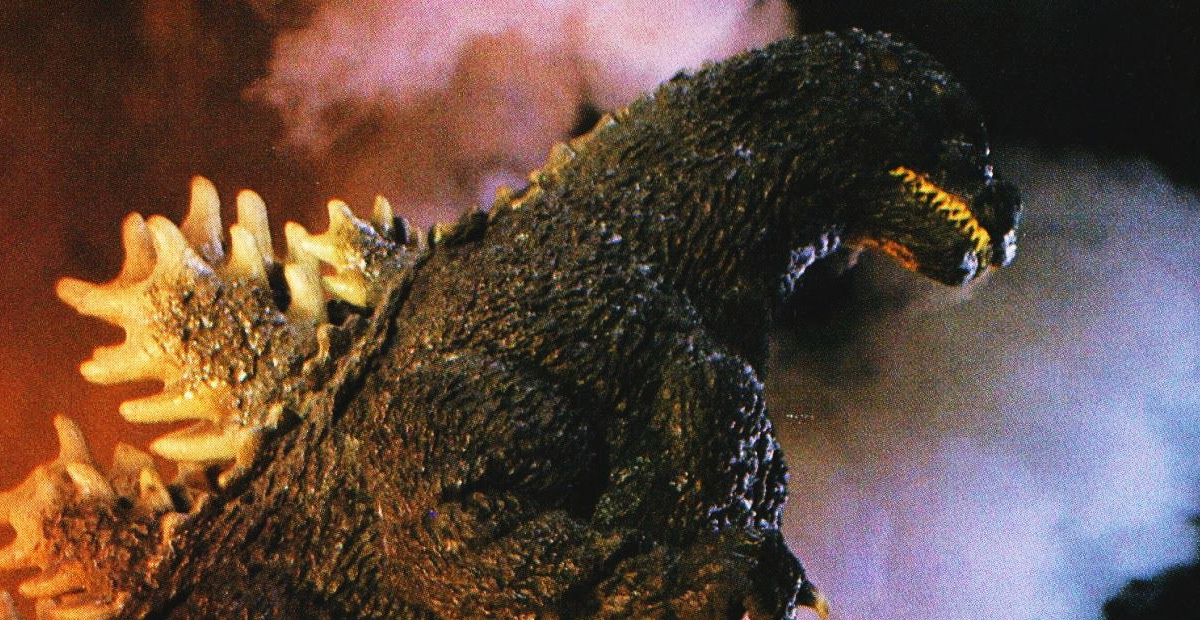
‘84 also serves as a stylistic prototype. It’s dark and gloomy with dramatic lighting cast upon often impressively sprawling sets. Those key things are amplified in the following entries, with the two directly following having some of the most impressive imagery in the franchise. Godzilla vs Biollante is hailed as one of the best entries in the Godzilla film catalogue overall, and for good reason. Impressive suit and puppetry work are highlighted by dramatic backlighting and a fun, fitting score that gives us one of the most satisfying Godzilla rampages to this day. It set the path for what the era would be as a whole: strange, dramatic, and cool. The film’s sequel would further expand upon all of those attributes as well. Godzilla’s origin gets meddled with by time travelers and results in him being reborn even larger and less forgiving. Strange, dramatic, and cool.
There’s a moment I love in Godzilla vs Mothra when, after falling through a fissure at the bottom of the ocean during a fight with Battra, he reemerges from Mt. Fuji. The characters all get their moment to realize and acknowledge that Godzilla has swam through the molten of the deep earth back to the surface unfazed. In the G-Force situation room the characters stand in awe as the platform they occupy rotates them to face a giant screen showing Godzilla’s re-emergence. It’s the perfect example of how the series elevates certain moments and ideas and sells you that sense of what a tremendous creature they’ve created and meddled with. It’s the perfect example on how the series sells you on just how cool Godzilla is. It repeatedly sets the stage for Godzilla to come out in the most dramatic fashion, backlit with fire and explosions with sights set on a city.

City is another key word I want to spend a moment on. While the previous Showa era had no shortage of great city destruction scenes and amazing sets, a combination of tight release windows and budgets resulted in many of the middle to later films taking place on islands or in large open areas of countryside. Something I noticed throughout my Heisei rewatch was just how often we are treated to massive sets with full portions of cities recreated to a staggering scale. Godzilla vs King Ghidorah is a wonderful example, with the rampage leading to his final confrontation with Mecha-King Ghidorah taking place in an immaculately recreated Tokyo. A grand sense of scale of modern monsters in the modern world is continuously on display, and it’s something I’m not sure these movies have been given full and proper credit for on a regular basis.
While the dramatic and often gloomy tone and distinct visual flair are what drove this retrospective I feel it wouldn’t be complete without acknowledging a major part of what made the Heisei era so beloved amongst fans- continuity. Sure, the preceding era had loosely followed itself with recurring kaiju stars and crossover monster mash ups, but this was the first time we were given multiple characters to follow through the course of a full decade. We watch Miki Saegusa go from a teen honing her ESP to a pivotal member of G-Force who’s entire perspective on Godzilla as a being shifts, especially when Junior comes into the mix.

Lastly, through this continuity we get to see Godzilla himself evolve as a character. Attempt after attempt to stop him catches up with us as he proves himself as a constant fixed point in the world who is bound to exist regardless of the circumstances. While the journey is often a punch in the gut and Godzilla is pushed to death by the circumstances of seven movies spanning ten years his life force restores and lives on through Godzilla Junior, who rises at the end as a fully grown shadow over the destruction left by his predecessors final moments. Even in death Godzilla is reborn and lives adjacent to us as a constant reminder of our place in the world.
Over thirty years later and the world the dedicated crews crafted remains a place of joy and comfort for countless fans the world over. The Heisei era delivered nonstop iconic moments as well as fun and well-designed original kaiju that expanded the ever growing roster of kaiju to the Godzilla pantheon. It also gave us a fearsome new look and characterization for Godzilla that would form a new basis for how the character was presented going forward and would further cement the character as one of pop culture’s most enduring legacies.