There can only be one Godzilla.
This fact is so ingrained in the way that Toho has treated the character over the years that a major recurring theme of the Japanese movies is the failure of various imposters, clones, and wannabes to usurp the King of the Monsters. Many have tried. All have failed.
While the Shōwa era introduced us to a fair number of similar dinosaur-inspired kaiju, the first true Godzilla doppelgänger was Mechagodzilla. Let’s not forget that in his first appearance, Mechagodzilla was not just a Godzilla-shaped alien robot, but he was covered with synthetic skin Terminator-style and actively trying to impersonate his namesake. This idea of usurping or “framing” Godzilla is a novel idea and one that hasn’t been explored in any of the subsequent Mechagodzilla incarnations. Although, the fact that in the late Showa era, Godzilla was well-regarded enough to be framed, tells you a lot about the Cookie Monster-ish place the character was at that time.
The Heisei Era brings us not only a new man-made Mechagodzilla but a young offspring. The Heisei movies also add an element of biotech into the franchise. Remember, the 1980’s and 90’s were the heyday of Michael Crichton techno-thrillers like Jurassic Park, and the Godzilla franchise has never been shy about copying the popular entertainment of the day. It only makes sense: Godzilla is leaving his DNA all over the place so it’s only natural that people would want to study and manipulate it. The Heisei era then gives us not one, but two different Godzilla hybrid clones.
1989’s Godzilla vs Biollante gives us our first true biological clone of Godzilla. Biollante is famously a version of the kaiju improbably cloned from Godzilla, human, and rose DNA, resulting in a hulking plant monster that truly dwarfs the King of the Monsters but ultimately only vaguely resembles Godzilla. Biollante might be more of a cousin than a clone but remains one of Toho’s most ambitious and imaginative creatures.

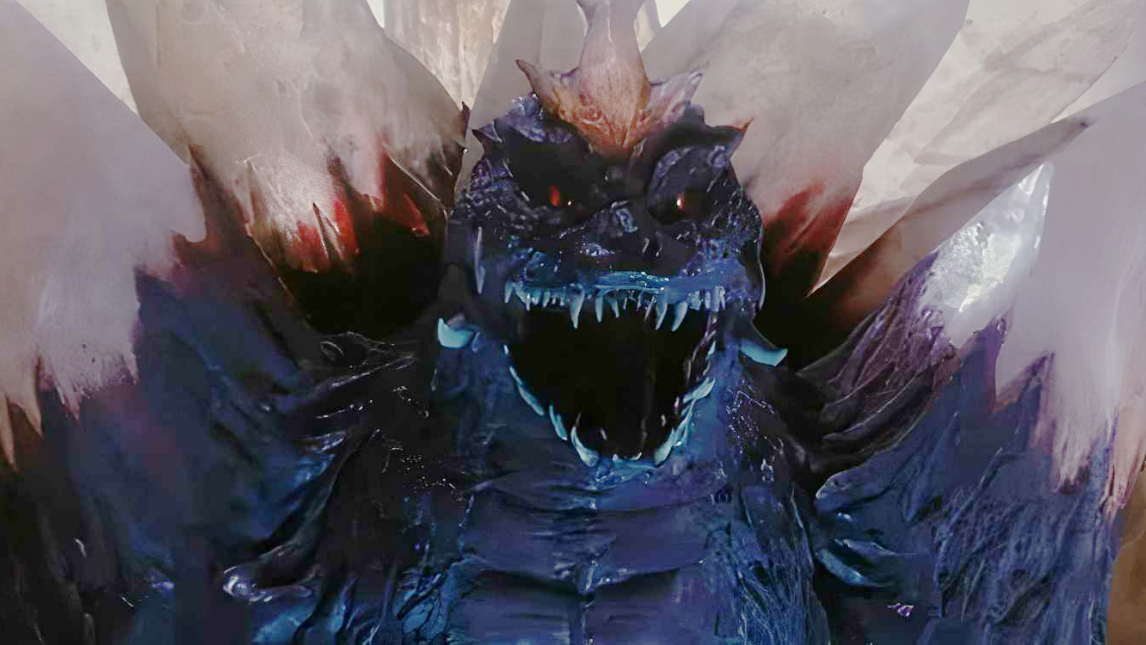
Our second Heisei clone is SpaceGodzilla, a new kind of Godzilla clone, made from Godzilla cells that traveled into space and into a black hole. This kaiju has a much closer resemblance to Godzilla for a good out-universe-reason: he is literally a powered-up Godzilla design for a 1990’s video game that was repurposed to be the adversary of 1994’s Godzilla vs SpaceGodzilla.
He is one of the King’s cruelest and most dangerous foes and notably captures and tortures the juvenile Godzilla. If I were SpaceGodzilla’s therapist, I might mention that perhaps he is acting out on some feelings of deep-seated jealousy of Godzilla’s natural offspring. The Heisei movies end with the death of Godzilla and his official designated successor taking his place, instead of any of his problematic clones.
We’ve been looking at in-universe identity crisis elements of the series but let’s turn our attention to some impactful real-world events. Between the Heisei and Millenium movies some notable things occurred in the real world of Godzilla and kaiju movies that would seep their way into the movies.
First, there was the incredible run of Gamera movies directed by Shusuke Kaneko which were arguably better and more popular than their contemporary Godzilla movies. This was unprecedented, because when it came to the kaiju genre, it is arguable that The King of the Monsters had always been in a class of his own. Certainly, lots of other countries produced their own knockoff giant monster movies but most of these are barely worth remembering, in my opinion. By the end of the Twentieth century, almost every notable kaiju movie had been produced by Toho studios. Besides, the Gamera series had always been something of a joke in the West; best known at the time for being fodder for Mystery Science Theater 3000.

So for there to be another movie in the genre that was arguably of equal quality or better than what Toho was putting out in their flagship series was something that was probably shocking and disturbing to the studio. Not to mention it was another Japanese studio and it was the part of the upstart Gamera series. The Gamera trilogy was clearly a challenge to Godzilla’s supremacy in a genre that he had completely dominated for almost half a century.
The second behind-the-scenes element that features in our discussion is the American Godzilla movie released in 1998, and directed by Roland Emmerich and written by Dean Devlin, the duo who had produced the hit Independence Day a couple of years earlier and who had a penchant for modern-day disaster movies and visual effects. Toho had been trying to get an American remake off the ground for most of 1990’s while they were producing their Heisei films. They even went as far as to kill off the character in Godzilla vs. Destoroyah to make way for a prospective American movie series. The resulting TriStar-produced movie, while ubiquitous the summer of its release, is not considered to be a good representation of the character. While the filmmakers gave the kaiju a slick and modern redesign, their version of the creature was essentially a big CGI dinosaur and lacked some of the mythic resonance and power that are central to the character. As one Toho creative is quoted to have said, “They took the god out of Godzilla.” The American film series ended up being a one-shot and Toho were faced with relaunching the Japanese film series far earlier than they had anticipated and in an environment where the character had lost some of its luster and suffered some international embarrassment—something to which the Japanese are quite sensitive.
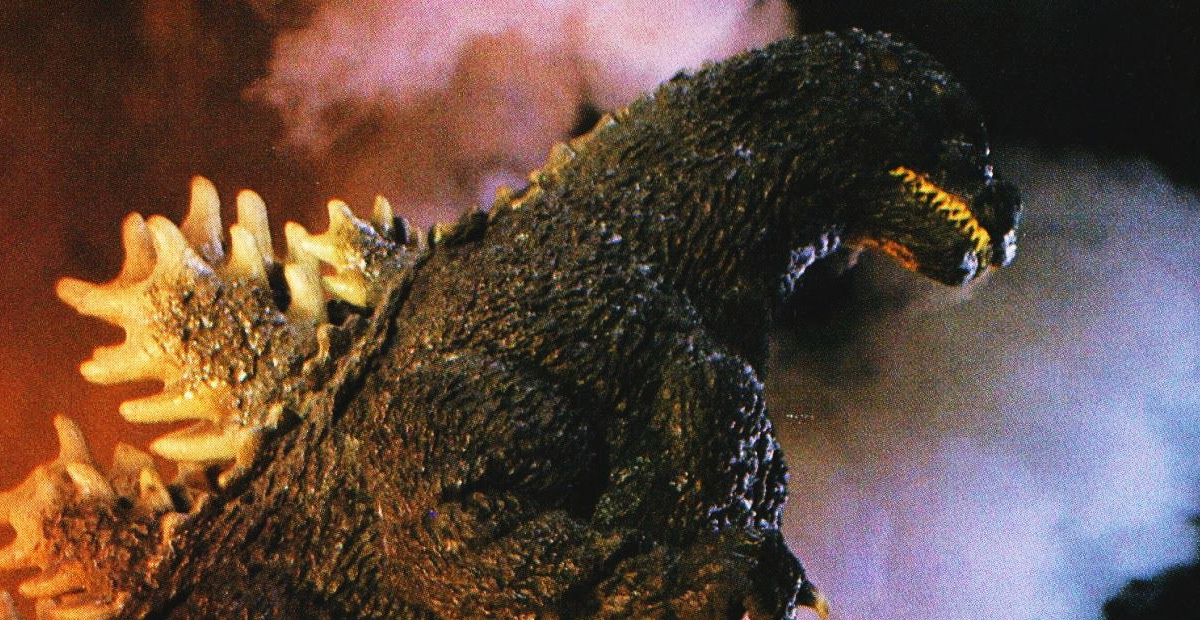
It was into this environment that Godzilla 2000 was released. Technically it debuted in 1999-only a year after the Tristar movie—the first of the Millennium series was very much a reaction to both Shusuke Kaneko’s Gamera movies and the American remake. There is definitely an air of defiant swagger about this movie, which gives us one of Godzilla’s finest and most imposing designs, complete with oversized rose-colored spikes and a permanent reptilian scowl. This entry is very consciously an attempt to make Godzilla epic and relevant again and an (not-entirely successful) attempt to bring the production values up to Hollywood levels. While this movie marked a return to the classic suitmation technique to bring Godzilla to life, it was the first movie in the Japanese series to employ CGI in a meaningful way. The movie was also notable for an (at the time) rare US theatrical release, I think purely as a matter of pride to have the movie screen on U.S. soil after the failed American remake.
The fact that this movie is essentially a reaction to both the 1998 movie and the Gamera series is especially clear in the film’s antagonists, first in the form of a UFO, potentially a reference to Independence Day and then in the form of the final kaiju, Orga, a creature newly-designed for Godzilla 2000. Orga is a big bruiser, who—with his noticeable shell-like hunchback—cuts a very Gamera-esque silhouette. His head, however, features the distinctive oversized lower jaw and a clear resemblance to the American Godzilla.

Not only that, but the whole m.o. of this creature is to absorb Godzilla and literally become him. Indeed, he nearly succeeds in doing this. Much like Biollante, Orga attempts to pull Godzilla into his ever-expanding maw in a wild scene almost like something out of The Thing. It was a rare foray into bio-horror and unprecedented for something in this series. We even see Orga begin to grow the distinctive G2K dorsal spines before the kaiju king blasts him from the inside. Putting Godzilla in your mouth is always a terrible idea. The subtext elevates Godzilla 2000 from a mid-level entry in the series to a fascinating meta-commentary on the franchise and the genre as a whole.
Gamera trilogy director Shusuke Kaneko himself was recruited to direct the third entry in the Millennium series, Godzilla, Mothra, and King Ghidorah: Giant Monsters All-Out Attack, a movie that gets my vote for best overall entry in the genre. With the American movie in the rearview mirror, Toho has here co-opted the Gamera director to make a genuinely great Godzilla movie. If the American movie took the God out of Godzilla, GMK puts it squarely back, giving us another bold and decidedly menacing redesign and drawing from the kind rich cultural and mythic context that had made Godzilla a compelling character to begin with. And not for nothing, one of the opening scenes features a briefing in which a character refers to a giant monster attack in New York City, which some people had mistakenly thought was Godzilla, a line that both continued to throw shade at the TriStar movie and which intriguingly suggested that the creature actually exists in the same universe.
Entries four and five of the Millennium series—Godzilla X Mechagodzilla and Tokyo S.O.S. — featured Kiryu, a new version of Mechagodzilla. While Kiryu does not try to actively impersonate the kaiju like Mechagodzilla I, he has his own unique identity issues. This version of the character is a type of cyborg built around the bones of the 1954 Godzilla and very quickly goes haywire upon its first clash with its successor. It should also be noted that Tokyo S.O.S. features the corpse of Kamoebas killed offscreen by Godzilla. It’s not for nothing that Kamoebas, like Gamera, is a turtle kaiju. Shade thrown. This Mechagodzilla duology ends with the two kaiju ultimately flying off into the ocean together, a relatively harmonious resolution to one of these Godzilla identity crisis movies.

And, of course, Toho was not done trolling the American movie. The creature, now dubbed Zilla—Godzilla without the “god”—actually appeared in the CGI flesh in the concluding movie of the Millennium series, Godzilla: Final Wars. This film was conceived as a big Destroy All Monsters-style battle royale featuring many of Godzilla’s classic foes and allies over the years and Zilla is featured in a battle with the true Japanese Godzilla—who quickly dispatches him. To add insult to injury, the movie’s antagonist refers to Zilla as a “tuna head.”
With that last bit of humiliation Toho seems to have made peace with Zilla as the creature has appeared in comics and other ancillary material side-by-side with Toho’s other kaiju. Zilla even has its own little Toho pictogram. What lesson can we learn from all this Godzilla Identity Crisis business? Maybe in the case of Zilla, there are no bad monsters, only bad filmmakers? Maybe now that he is not actually trying to be Godzilla, we can all accept Zilla like we do, say, Manda, Kumonga, or Ebirah.
Certainly, Godzilla is riding high these days, a far cry from the state of the movies in the late 1990’s. The Gamera series—despite a really terrific Anime a couple years back—has been largely moribund since the 2000s, while Toho’s movies like Shin Godzilla and Godzilla Minus One are critically acclaimed and routinely released in the U.S., with the latter actually winning an Academy Award for Best Visual Effects, finally achieving those Hollywood-level production values. On top of that, the American series centered around a solid version of the character is still going strong. After many lean years of scraping by with the only the occasional movie or video game, Godzilla fans are eating good in the 2020’s with multiple Godzilla franchises to choose from.
It seems there can be more than one Godzilla, after all.