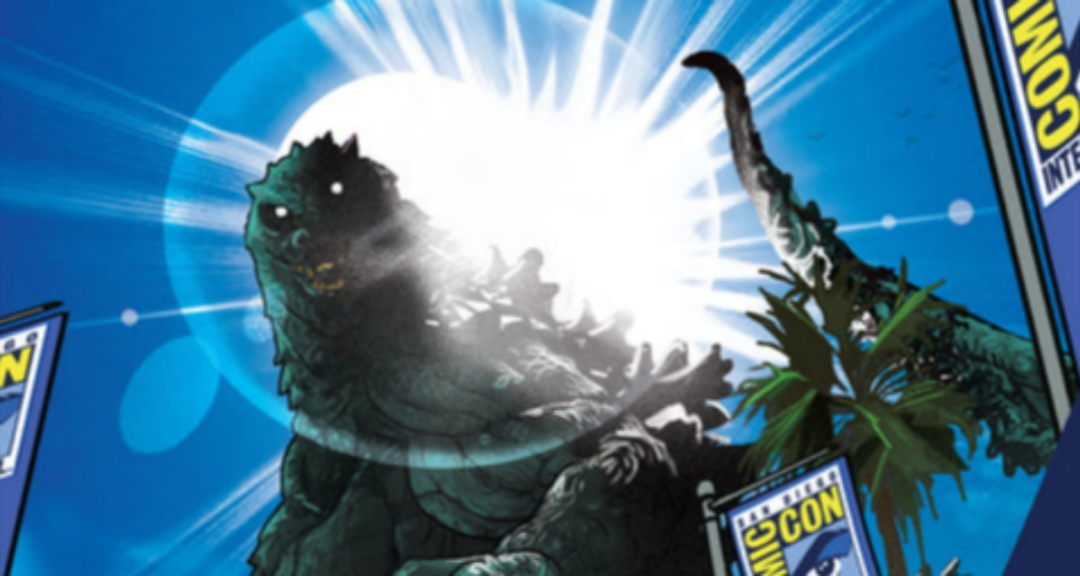
In case you’ve all been living in the caves on Letchi Island for the past few months, it is the age of the crossover when it comes to Godzilla. With the IP as popular as ever thanks to the MonsterVerse and the international success of Godzilla Minus One, everyone seems to want a piece of the pie. We got our first taste a few years ago with Godzilla vs. the Mighty Morphin Power Rangers and that just opened the floodgates. Since then, we’ve gotten a Justice League crossover, follow-ups to both that and the aforementioned Power Rangers, the Teenage Mutant Ninja Turtles, and most recently, Sonic the Hedgehog, not to mention the iconic Monsterpiece Theatre series, featuring crossovers with a variety of classic literature characters.
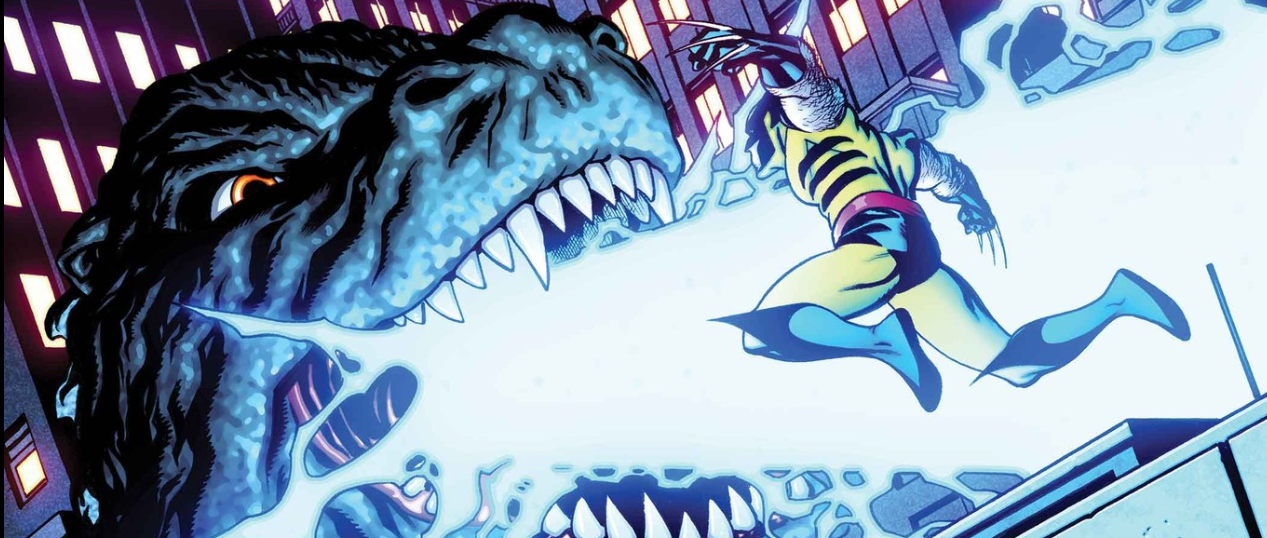
But no one has been hungrier for the crossovers than one of comics’ oldest heavyweights, Marvel Comics. In addition to a series of one-shots focused on pitting the King of the Monsters against specific Marvel heroes, Marvel then tapped Gerry Duggan, who’d previously helmed the Godzilla vs. Hulk one-shot (one of the best of those one-shots, might I add!) to write what’s now become a trilogy of series with Godzilla Destroys the Marvel Universe, Godzilla: Infinity Roar and now finally, Godzilla Conquers the Multiverse. While there’s no telling whether this is in fact the final installment of this project, a name like that certainly brings a tone of finality to it, especially given the circumstances.
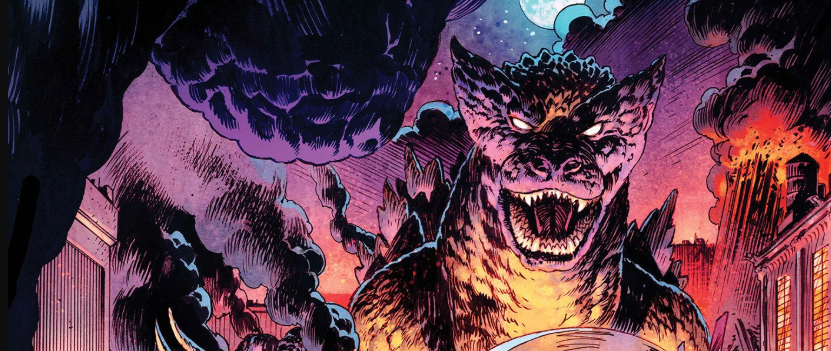
Multiverse picks up right where Infinity Roar left off, with Knull, the God of the Symbiotes, having infected Yggdrasil, the World Tree, with a symbiote Godwyrm, causing all life in the universe to become bound to a symbiote, leaving Knull ruler over all life. The only beings free of symbiote control is a small team of heroes and villains led by none other than Doctor Doom himself, who plans to search the multiverse for another monster capable of defeating the symbiote-empowered Godzilla and thus finally overpowering Knull.

Godzilla TM & ©Toho Co., Ltd.
©Marvel
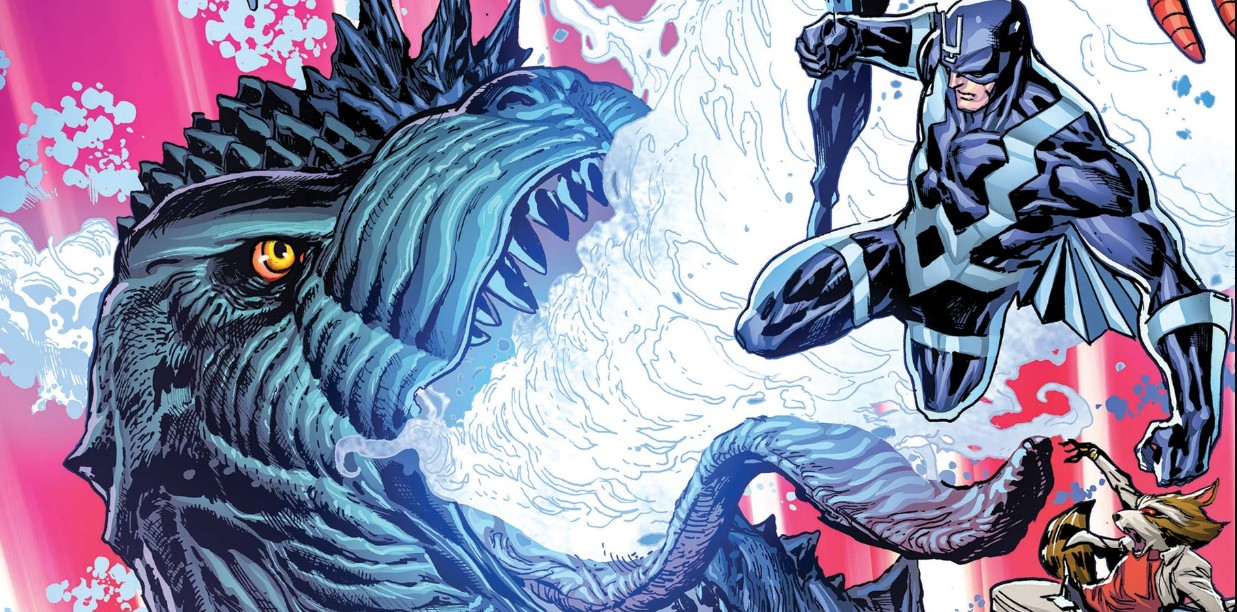
This first issue follows that basic plotline for almost the entire time, following the Avengers of Doom through various dimensions, meeting a variety of monsters from both Marvel’s and Toho’s bestiary with very little luck. This trial and error approach mirrors the structure of Godzilla Destroys the Marvel Universe, which featured a different group of heroes trying and failing to stop Godzilla, often just making him angrier and/or stronger in the process (somewhat to the overall book’s detriment). This time around however, the trial and error actually feels like it serves the story rather than showing us how big and powerful Godzilla is, something we as fans are already well aware of. It’s also just plain fun. If you’d told me 10 years ago that I’d see Ghost Rider trying to… ghost ride Kumonga and actually being semi-successful, I’d have laughed you out of the room, but here we are.
One of the biggest strengths of this book is its lineup of characters. Not everyone gets a chance to shine (though this will undoubtedly change as the series goes on), but a team composed of Doctor Doom, Ghost Rider, Spider-Man, the Punisher, Emma Frost, Man-Thing, Kang the Conqueror, and the Human Torch is a combination I never knew I wanted. You get little moments like Spider-Man gleefully referring to Doom as “Captain Latveria,” Ghost Rider and Kang bickering constantly, then followed by Torch chiming in when the latter is proved correct in a pretty brutal way. It’s a ton of fun, and I honestly can’t wait to see more of these characters interacting as the series goes on.
Javier Garrón’s artwork as well has consistently been a highlight of this trilogy. His works rides the line so well between expressive but not overly cartoonish that works so well for comics in general but especially a book like this. I’ve definitely seen the end of the final issue of Godzilla Destroys the Marvel Universe, where the Human Torch from the future contacts the present day Fantastic Four and tells them not to send Godzilla to space reposted more than once, highlighting the look of horror on everyone’s faces as they’ve just done that exact thing. While there’s nothing quite like that in this series just yet, there’s plenty of that expressiveness that I love about his work to be found here.
The Marvel crossovers have so far been a bit of a mixed bag. The one-shots, being tackled by different creative teams, were especially hit or miss. And while Destroys the Marvel Universe started to feel pretty repetitive with its structure, Infinity Roar course corrected and set the saga on a more interesting path narratively and got me back on board. So far, Godzilla Conquers the Multiverse has continued that upward trend. The first issue does what it should; set the stage for bigger things to come, but makes sure to give readers enough action so as not to leave them wanting. And when the multiverse is in play, anything is possible.
Give me the classic 1978 Godzilla, Marvel. You know you want to.