Hello, KU readers! Welcome back to another installment of our Letters to the Editor column in which I will review your questions, comments, and feedback sent directly to Kaiju United’s editorial department. Due to the immediate success of our debut installment, I wanted to go ahead and publish two more questions that were sent to us the day we published the first one. I am blown away by the insightfulness put into these two questions as well as just how unique and varied both of them are. I’m happy to answer them the best way possible with my experience in this community for so long, but there’s even times that I must call upon help. Huge thank you to Simon and Genevieve for sending in these two to our inbox, and hopefully, there will be more to come!
Hi,
Here in the UK we struggle with Godzilla content – yes, it is available but not as much as in the US (excluding the homeland Japan here!)
We have no specific Godzilla store so if we want merch it is either limited choice from Amazon or Forbidden Planet
Netflix in the US has Mothra season for this year’s 65th Mothra anniversary but in the UK, nothing.
US has G-Fest, UK has nothing.
I appreciate there is less of an audience in the UK, for now, but surely by continuing to exclude it, they are missing out? That said I do not know if this is actually more of a Europe-wide thing where Godzilla has just not been as popular elsewhere? Would appreciate your thoughts.
Thanks
Simon
Hello Simon!
Thanks for this great question and letter. I do think there is less of a “established” presence of Godzilla in the UK, but there is no shortage of fans that adore the franchise. Some notable ones: Cartoonist and writer Hamish Steele, Christopher Stewardson (he wrote a phenomenal book on Ghidorah, The Three-Headed Monster!), Steven Sloss, and many others. The big push right now is Steven Sloss’ great work in arranging screenings across the UK for people to finally see these films for the very first time.
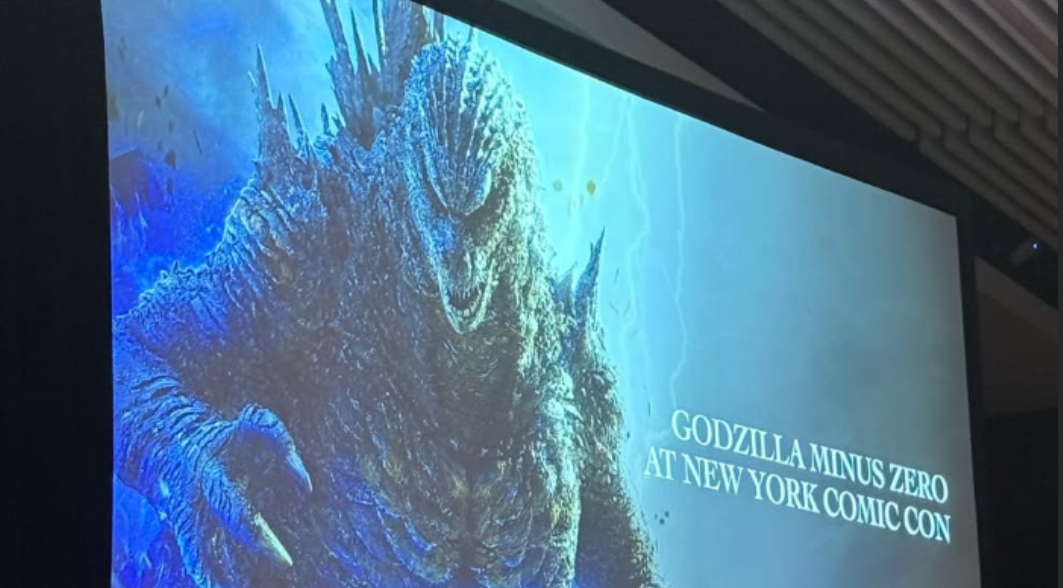
G-FEST, while popular, is not the end all be all in America, either. There are screenings all over the country, there are numerous other conventions like Kaiju Brooklyn and Godzillafest San Franciscio, and there’s just been a really massive push over here with Toho International at the helm for a few years. I understand that all of the above is still far more than the UK has received as of late… but don’t worry, it’s very likely that it will change soon! Luckily, I think the UK is next in Toho’s global push, as Minus Zero will hit theatres the same week as the United States over there, thanks to Toho purchasing Anime Limited and utilizing them as a European distributor. Some of those Anime Limited people will also transition to Toho-centric roles, so I would fully expect a UK Godzilla Store and other fun things that the United States has had for a while pretty soon.
As for the “why” this has taken so long, I could not say other than speculate that the American market is just that much bigger. I think it would be lovely if UK fans were to assemble a fan convention over there, as it would really bring people together in awesome ways. There’s a tremendously strong Tokusatsu presence there with organizations like Toku Power Taisen, but aside from the UK Kaiju Fans group on Facebook, I’m not sure what else there is. Maybe Hammer Horror and the Universal Monsters are more popular? I would love one of our friends from the UK and Europe to help weigh in on this, since I’m not from there!
I will reach out and ask them for more insight and get back to you, hopefully we can see more awesome events for the kaiju fans over the pond! We’re off to a good start with the Minus Zero theatrical rollout and The Barbican having a screening of GMK in 35mm, but I am positive that there will be more to come very soon.
Hello! Thanks for doing this series! I’m fairly new to the world of kaiju—can you tell us your understanding of the term? I’ve heard dai-kaiju, too, but it feels tough to build a sense of what the different schools of thought here are, beyond the term “strange beast.”
Thank you!
– genevieve
Hello, genevieve! Welcome to the world of kaiju – there’s so much out there and we hope you are having a wonderful time with the genre. That’s a fantastic question, and quite honestly, it boils down to various schools of thought on the subject matter. Please buckle up, as this may be a long one.
To start, I will just go with the most basic, literal terminology, and then give you my thoughts. This answer is going to be very nerdy, but I sincerely hope it helps!
The pop culture osmosis has made people familiar with the term “kaiju” as something that is a giant monster, but the literal translation, from my understanding (and this is what some folks miss) is that a kaiju is a strange and unfathomable beast. The keyword there that everyone misses is unfathomable. A kaiju is a strange beast that cannot exist, and should not exist. A good example of a kaiju is Booska or Pigmon. That being said, the Western adoption of the word kaiju has typically made it an all-encompassing term for a monster, specifically a building-sized monster, and while that is the generally accepted new terminology in our popular culture, it is technically not correct. We at Kaiju United are pretty flexible with the term Kaiju, as it is more accessible and easier for our readers to understand, but many scholars out there would go by this literal translation and verbiage, including the different terms I will list below:
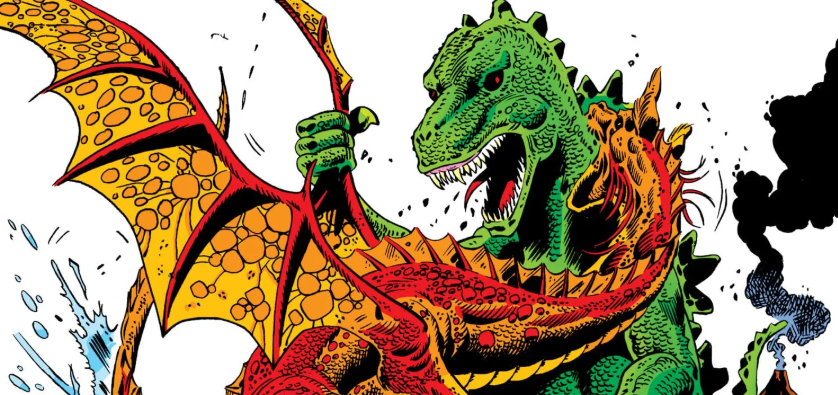
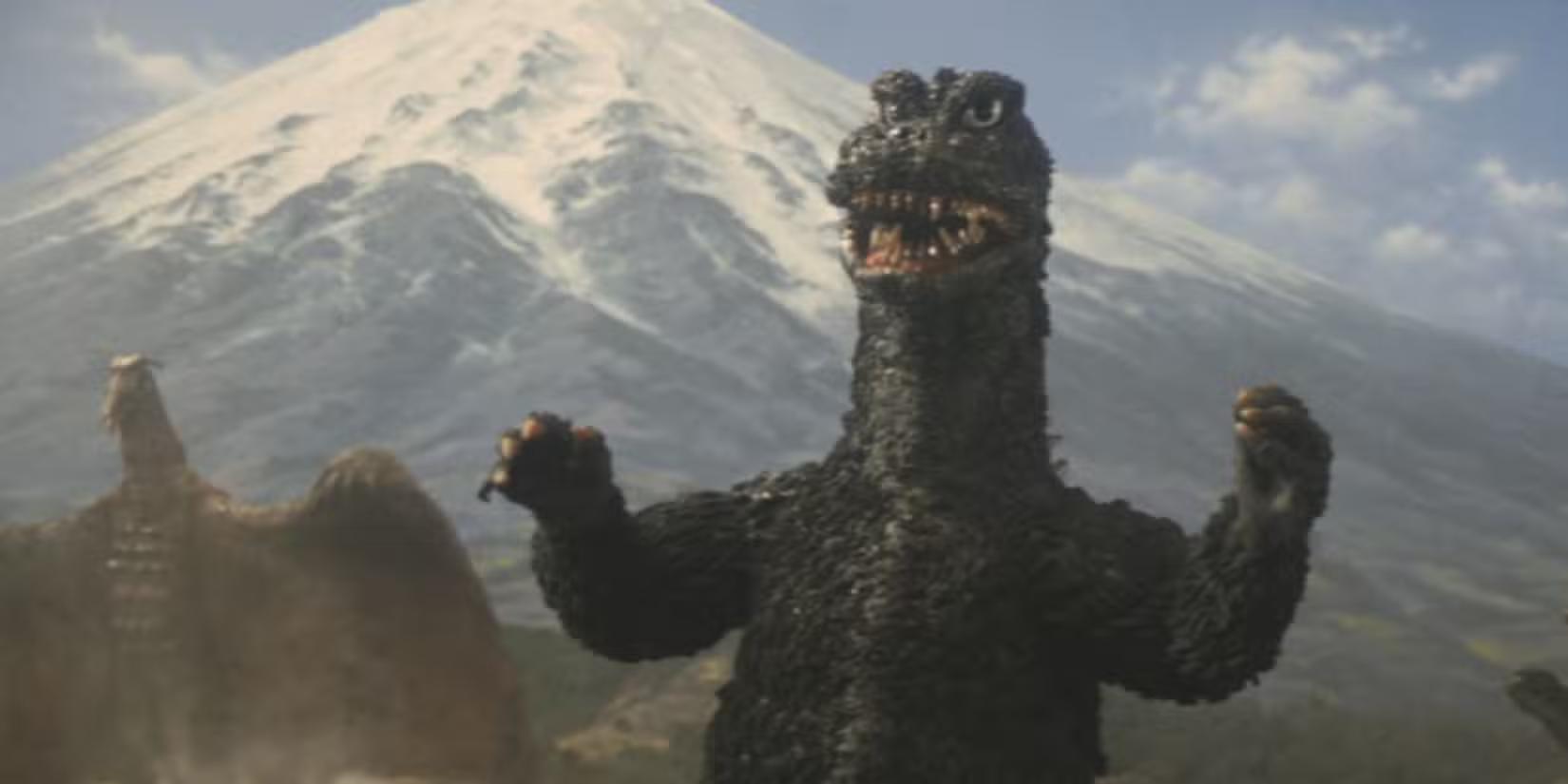
Where things get interesting is when the term “daikaiju” gets thrown in. “Dai” in this context refers to something big or large, so when paired with kaiju, a “Daikaiju” is a very big or large strange and unfathomable beast. ie; Godzilla, Gamera, Red King, Rodan.
There’s also the term “kaijin,” which essentially means “mysterious person.” Most of these would be characters like The Human Vapor, The Invisible Man, or the mushroom creatures from Matango. There is not really an English word to pair it with, but they usually refer to villainous supernatural creatures of humanoid characteristics and features. Very interesting! On the contrary, there’s also “Seijin” which can mean several things, but is commonly used in kaiju and tokusatsu media to refer to extraterrestrials from (insert) planet. For instance, Baltan Seijin from Ultraman is an extraterrestrial from Baltan.
Finally, there’s unique names, such as Daimajin. Majin typically refers to characters that are magic, supernatural, or demonic, and thus, “Daimajin” literally translates to “Giant Devil” or “Great Demon God.” Daimajin is basically a supernatural golem god that awakens when people are persecuted or oppressed, and he shows up and exerts extreme wrath and judgement upon those who dare oppress those that worship him. He even parts the sea down the middle in Daimajin 2, really emphasizing that “God” part of his name.
To break it down easily, there are basically two schools of thought. One side accepts the “Westernization” of the term “Kaiju” to be flexible and anything and everything related to Japanese monsters or just giant monsters in general. As a perfect example, this school of thought would consider King Kong or Clover (Cloverfield) a “kaiju” as they are characters featured in American giant monster movies. This truly kicked off with 2013’s Pacific Rim, where all the giant monsters featured in the story were just broadly considered “kaiju,” and has continued in films such as 2025’s Superman, in which the giant creature is just simply referred to as “The Kaiju.”
The second school of thought is that kaiju is a Japanese word with very specific Japanese meaning, which is objectively true, but the scholars do take it a bit further. Godzilla films are part of what’s called kaiju eiga, which means “monster cinema,” essentially. Many academics believe that kaiju eiga, or kaiju films, are inherently and intrinsically Japanese, because of the deeper layers of societal commentary, nuclear allegory, and other very culturally-specific features in the films. An apt comparison would be the Italian giallo cinema of the 1970s and 1980s, where there are certain elements that make those movies distinctly Italian. While I do agree, the waters get muddied because of films like Yonggary and Space Monster Wangmagwi, which are South Korean productions made in the “kaiju boom” era of the mid-1960s. While it is true these films were cashing in on the hype at the time and imitating a style, they are still by and large kaiju films, so it does indeed raise further questions. What qualifies as a kaiju film? That would have to be something to dive further into in a later piece.
A good summary to this long-winded answer is that it varies on the person, but at its core concept, anything that is a strange and unfathomable creature appearing in a movie, is technically a kaiju, BUT, not every kaiju is a daikaiju. Additionally, it is the opinion of editorial that we don’t want to take it to its furthest extreme and say something like, “Clifford the Big Red Dog is a kaiju.” There’s something very specific about how monsters in kaiju eiga are handled and characterized that is different from your typical monster of the week films in say, The Beast From 20,000 Fathoms or THEM! and it is our belief that these kaiju are are forces of nature, rather than animals on the loose, and that is one of the many key differences in movie monster “sub-archetypes,” for a lack of a better term.
I hope this answers your question! Thanks for writing in!
Thank you again to these two additional community submissions! I think it’s important to note that there are other countries with kaiju fans out there that do not have the luxuries we do in the United States, and it’s key to highlight that there is a demand for Godzilla in regions like the UK. I hope Toho delivers on that demand soon! It’s also a super vast and sometimes confusing world out there with how specific you want to tackle these amazing and incredible genre films. Art is subjective and there are various philosophies out there regarding the true defining traits of a kaiju, but once you are familiar with those terms, you can make your own judgement calls!
Want to voice your thoughts? Have something to ask KU editorial? Let us know below!