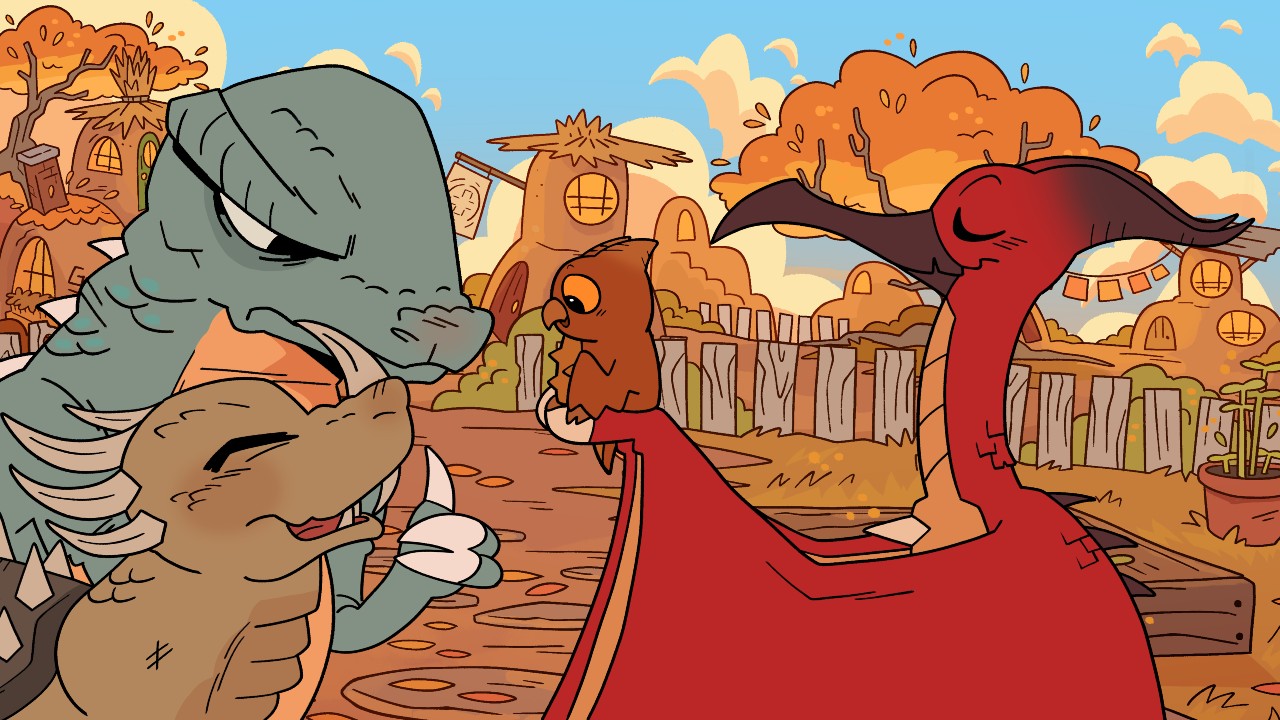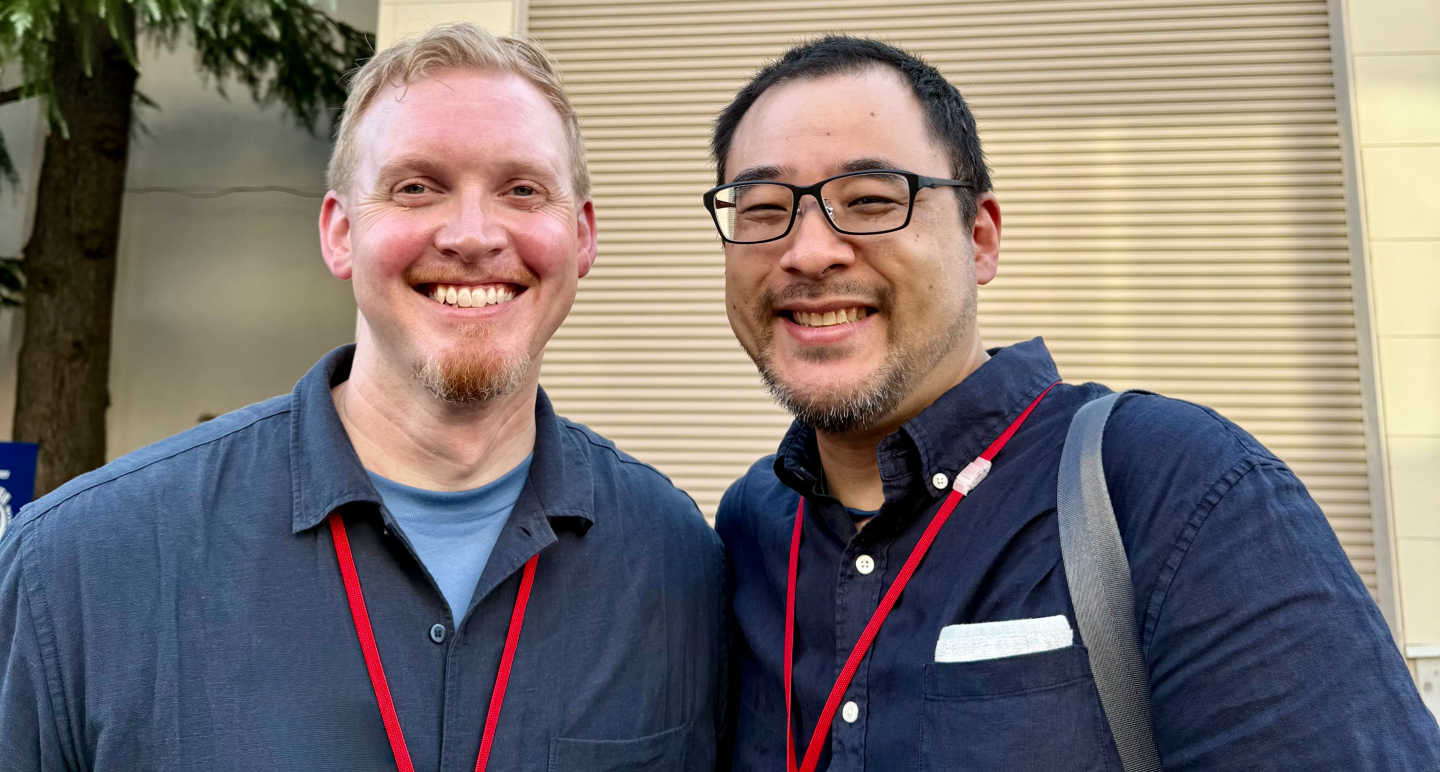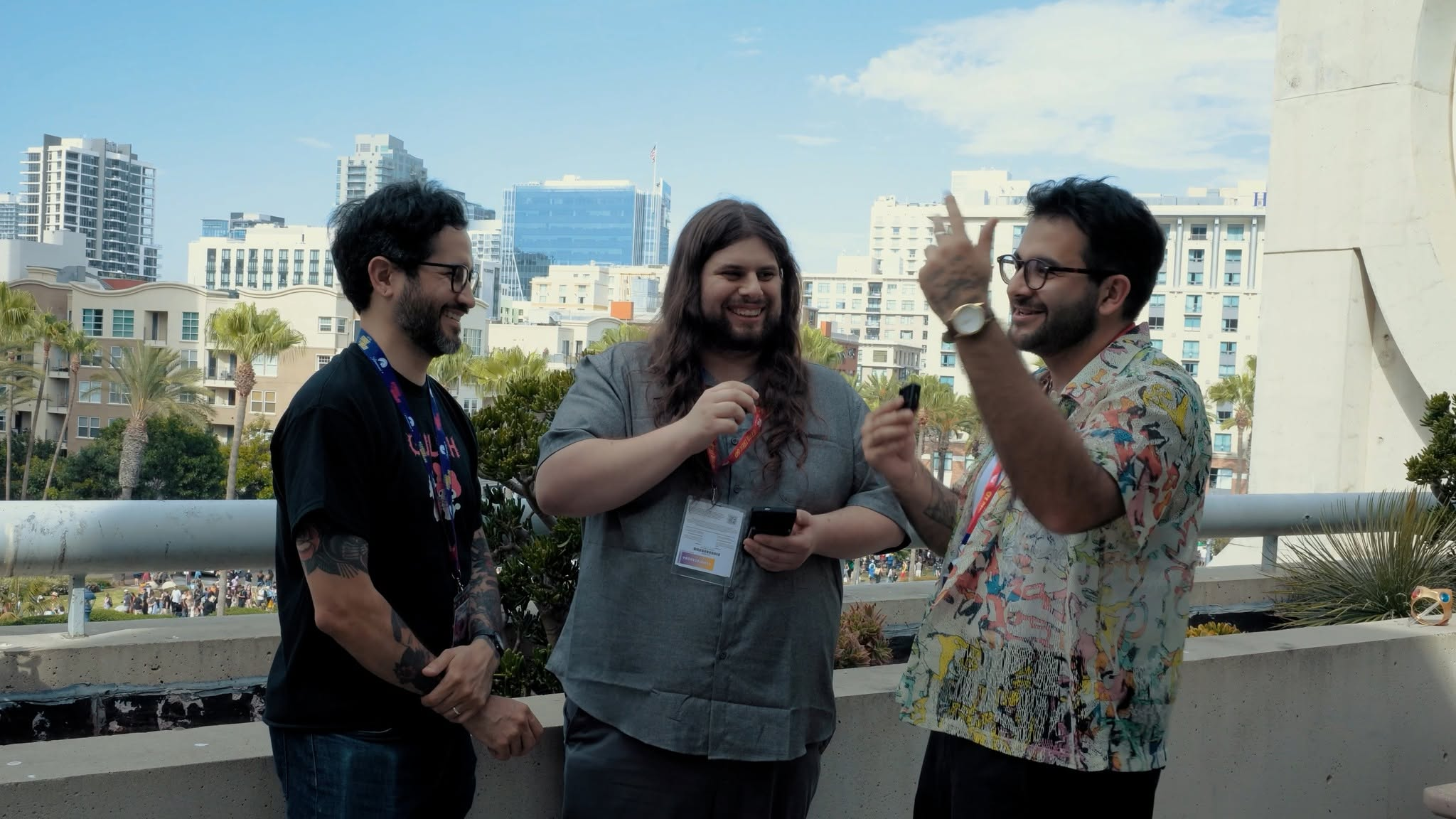
As the kaiju genre continues its “Renaissance Period” across movies, television, and comic books, there has been no shortage of creators providing their own spin on these giant, unfathomable beasts and the havoc they cause. Particularly, the comics medium has seen the rise of some of the most unique and diverse takes on the genre. While we do have Godzilla comics and Marvel had its Ultraman run from 2020-2026, the creator-owned and driven space has proven itself worthy of carrying some of the best kaiju stories around. The latest one to release will be No Gods, No Masters from Boom! Studios, which will lose the focus on traditional authority figures commonly seen in kaiju stories and instead focus on the survival of several working-class teenagers in the heart of New York City. At San Diego Comic-Con, Kaiju United had the chance to discuss the upcoming book with its writer Julio Anta and artist Jacoby Salcedo. The two are frequent collaborators that build unique stories together, and it’s clear that this book will be no exception. Read on below, as there are some exclusive details found in this interview for those curious about where the story may head.
Jacob Lyngle: Hello Kaiju United! We are live from San Diego Comic-Con. I’m here with Jacoby Salcedo and Julio Anta. We’re here to talk about No Gods, No Masters, which hits comic shops on September 2nd from Boom! Studios. Real quick, guys, for those that aren’t aware of the book, do you want to give me a basic rundown? Maybe an elevator pitch?
Julio Anta: Yeah, definitely! No Gods, No Masters is the story about three teenagers trying to survive a kaiju apocalypse. It starts when a massive kaiju emerges from the East River in New York City, wreaks havoc on the city, and these three teenagers go on a journey to try to find one of their moms who is stuck underneath the train station. There’s no power in the city, and really, it’s a survival book. It’s a book about teenagers who are not trying to stop the kaiju apocalypse; they’re not trying to save humanity. They’re just trying to save themselves.
Jacoby Salcedo: It’s one part Walking Dead, one part Paper Girls, all kaiju.
Jacob Lyngle: Awesome. Well, I know you guys kind of went into the general idea that this is a survival story. Our teenagers, they’re not, you know, figures of authority that we typically see in kaiju media. A lot of kaiju readers might be like, “Man, these kids have a lot of plot armor going on.” How did you find the perfect balance between stakes and survival in this kind of story?
Julio Anta: I think for me, every time I watch a kaiju movie or even when I read superhero comics, I think about… “What are the lives of the regular people in Gotham, in Spider-Man’s New York City, [or] in a Godzilla movie?” You know, when Godzilla’s rampaging through a town or when Ultraman is fighting a kaiju. What is it like to be a food delivery worker? What is it like to be a nurse? So for me, it’s really just about the lives of these real characters who are just trying to survive. And if we center the story on those characters while still providing really fun kaiju action, I think that’s how we strike the balance.
Jacoby Salcedo: Yeah, I think we’ve got that core idea of real people and these dramatic settings. And yeah, just having this real POV during a kaiju attack, I think it’s just a different take that you don’t usually see in any kaiju media.

Jacob Lyngle: I’m not going to spoil anything, because the book doesn’t come out for a little while, but I know early on you guys set those stakes pretty high. Was that a call you wanted to make originally, or was that just something you decided needs to happen in order for the story to really feel that realness of survival?
Julio Anta: Jacoby and I both grew up watching kaiju movies, collecting kaiju toys. I’m sure we’ll talk about that more later, but a Godzilla movie [can have] some of the highest stakes, especially if you’re thinking about [Godzilla] 54, you’re thinking about Minus One, these very grounded horror movies, essentially. So taking those influences and putting it into our book was essential. Yes, the city is being destroyed. That’s huge stakes for the world. But for a kid whose mom is 130 blocks away, trapped underneath a subway station, that’s the biggest stakes in the world.
Jacoby Salcedo: Yeah. And I also think it’s just from our previous work together: We tell stories from POVs that aren’t usually told. You know, it’s a lot of, like, migrant voices… and the stories do follow that. And we do have a kid… our main character, Felipe, he’s a migrant from Venezuela, actually; he’s a refugee from Venezuela, from an already established kaiju attack—
Julio Anta: —-That was a spoiler, but it’s okay. Well, it’s an exclusive spoiler.
(collective laughter)
Jacoby Salcedo: But yeah, we’re building this world and we want to make sure that our voices are also very much intact in this book.
Jacob Lyngle: This might be better for Jacoby, but feel free to chime in (gestures to Julio). I was watching a few more interviews that you did, Julio, where you talked about the kaiju’s design, and you mentioned some of the indigenous influences that went into that kaiju design when we were looking at what this creature looked like. I don’t know if it’s been shown publicly, but it kind of gave off Pacific Rim vibes. In regard to those indigenous influences, was there more of a cultural spin on the kaiju, or was it just more of a “let’s make them look cool” kind of thing?
Julio Anta: To give one last exclusive spoiler in Issue One, we establish that the attack on New York is not the first kaiju attack. There was actually an attack that already happened in Venezuela. And now this is the exclusive spoiler: There are kaiju that are emerging all over the world, and every single kaiju is linked to indigenous folklore of the area where it emerged.
For instance, the kaiju that emerged in Venezuela is based on an ogre cryptid of Venezuelan folklore. And the one in New York City is a North American cryptid that sometimes manifests itself in their mythology as very large (and sometimes smaller). We explore a lot of that lore in some of the back matter of our issues.
We put a lot of really cool in-universe documents and subreddits in Issue Two, where people are speculating about this kind of stuff in the universe. That was one of the original ideas for the book. Those of us who love kaiju media [know] there are so many amazing kaiju. And it’s very easy when you make original kaiju for it to feel like, okay, this is a Godzilla-inspired kaiju, this is a Pacific Rim or an Ultraman [kaiju]. There have already been so many different designs, but what we wanted to do is instead go back into history, go back into folklore, and use that as our inspiration.
Jacoby Salcedo: And also, [we’re] building off of the context of our stories. Like, the Amikuk is sea-based or water-based, so I wanted the kaiju designs to reflect that. So [for that creature], I have this hammerhead kind of design. With the Pacific Rim comparison, it was always going to be difficult to just try and find an original design and try to make something for ourselves. With all the Ultraman designs, you’re just bound to kind of recreate one of them, but the important part is trying to stick to something that fits the context of what the story is.

Jacob Lyngle: The title No Gods, No Masters… obviously that could refer to the youth and the anarchism that happens in survival scenarios like this. Do you think it could also refer to the kaiju? Is that something that you were thinking about with your story? Because, I mean, if you break down a kaiju as an archetypal character, they answer to nobody; they are these gods that defy all logic and should not exist. Was that something you both had in mind for that title?
Julio Anta: Yeah. You mentioned the anarchist roots of that statement [No Gods, No Masters]. This is a book about poor and working-class teenagers. That’s our focus throughout all of it. When Jacoby draws the kaiju attacking New York, he places the “camera” on humans, and you see nurses and construction workers trying to escape it, right? So for me, it was important to center workers and real, everyday people – working-class people. So that title is definitely a nod to that.
But like you said, it also refers to these god-like creatures who again, answer to no one, but are also in some ways unstoppable. But to our characters, they eventually do find out how to stop some of them, and they do fight back, so it almost feels like a rallying cry to me as well. I will give credit to Jacoby; he came up with the title, and when I heard it, I was just like, “Whoa.” Just when you’re hearing the name, I think you’re already intrigued by it.

Jacob Lyngle: In the [Boom! Studios] panel we were just at, it was stated that when doing these creator-owned books, you only do them if there’s a story that you truly want to tell. Previously, we’ve dived into the characters’ immigrant and working-class backgrounds and how you two are kaiju fans. What is the story you guys want to tell with this book? What was the driving force behind it?
Juilo Anta: I think the driving force, on top of everything that you mentioned, is really telling a survivor story. Jacoby mentioned The Walking Dead. The Walking Dead is one of the comics that got me back into comics as an adult. The other one (gestures to Jacoby), you mentioned, is Paper Girls, which is a coming-of-age story. And throughout our history, as creators and working as creative partners, we’ve always told coming-of-age stories. We’ve written for young adults. This book is written for adults, but it stars teenagers. I think for me, it’s so easy for me to go back to those feelings of being a teenager and feeling like the whole world is out of control, and that I’m also trying to forge my own path and my own identity and figure out who I am as a person. And then what if, in the midst of all of that, some of my favorite movies come to life and I have to survive it? So I think that’s a lot of what we were trying to do with the book.
Jacob Lyngle: The kaiju community is kind of eager to see new projects. Many stories do center around the humans, and because of that, a lot of kaiju fans are like, “We just want to see those monsters. Come on, show them off.” What makes your story stand out amongst some of the other stories in the genre? Additionally, what will entice kaiju readers to come check this out?
Julio Anta: We’ve talked a lot about the human story, but the kaiju designs are incredible. Jacoby just knocked it out of the park with the designs. And as much as we have talked about the human element, just know that without spoiling too much, there is a ton of kaiju destruction and action. In our story, of course, there’s the tall, giant kaiju that emerges from the East River and attacks New York City. But in the first three pages of the book, it’s a cold open, and you can see they’re not fighting a kaiju that is five stories, six stories tall. They’re fighting a kaiju that’s more like the size of an elephant.
So there is a lot of mystery around this book. Also, a lot of time has passed since the genesis of the kaiju emerging. Why are they smaller now? What is this mystery about all the other kaiju that have emerged throughout the world? Lastly, what happens when they do make it to the train station?
Another thing that we talk about in the book is when we go back to the day that the kaiju emerged; it says “The First Occurrence.” So if it’s a first occurrence, how many other occurrences are there? And how do the kaiju behave differently? How do we get to this point where there are seemingly dozens or hundreds of small kaiju roaming around New York City? I think the mystery element of it, too, is something that’s exciting. But if you want to see kaiju fans sort of playing with toys in this book, I think that’ll be fun for readers.

Jacoby Salcedo: Yeah, the human characters… sometimes I am that fan, that watcher, where I’m just like, “I want to see them fight!” And I’m mean on that one too. (laughs) I feel like with our story specifically, we have such a grounded perspective, because there’s the tall kaiju and then these smaller ones, and it’s all a mystery to our characters. The smaller one is also such a looming threat, and it kind of leans into that kaiju horror where it’s like, “What’s going to happen to our characters? Where do the smaller ones come from?”
Jacob Lyngle: Earlier in the panel, you two talked about buying kaiju toys. I have to know what you guys are buying. X-Plus? Bandai? Are you sofubi fanatics?
Julio Anta: Mostly sofubi. I started with Super7 and picked up the small scale ones. I just bought a bunch of those. And then eventually, you know, we did LA Comic-Con… long story short, Jacoby owed me some money there. (laughs) We went to Little Tokyo, and there’s this plaza with all these stores that sell sofubi and kaiju toys. And I saw Jirass, which I loved. It was painted beautifully in green. I forget how much it was, but it was around 250 bucks. And I forget how much it was, like 250 bucks….
Jacoby Salcedo: Ehhhh, it wasn’t 200. I’m not going to spend that much on him. It was like 110 I wasn’t that much in debt to you.
(everyone laughs)
Julio Anta: Well, either way, the boy math of it is that it only cost me $15 because he owed me the difference. That Jirass became my first sofubi. (gestures to Jacoby) He’s the real toy collector.
Jacoby Salcedo: I’ve got some Bullmarks. I do a lot of the Brain Dead collabs and Yamaguchi. But I’ve been trying to slowly get into, like, the indie stuff. I mean, I just like how goofy older and vintage-looking figures are. Like, the Garamon sofubi where he’s just like all legs. There’s something about those figures where I like the goofy ones. The realistic ones are cool; they look amazing when you see them, but I try and just stick to one because if I tried to do like, all Godzillas, then I’m screwed. (laughs)
Jacob Lyngle: All right, guys, last question. Kind of a fun fan one. Four favorite kaiju films, books, whatever you want to do. Let’s hear ’em’!
Julio Anta: Okay, well, I think one that we would both agree on is the Hedorah film [Godzilla vs. Hedorah]. We both love that one. I really loved Minus One. Like, I know that’s not a hot take, but that’s literally one of my favorites. (to Jacob) I was talking to you earlier about Ultra. My son and I have been doing a watch-through of the box set of Ultra Q. I’m also really enjoying Ultraman Teo right now, too. That’s four!
But you know what? Son of Godzilla was the first Godzilla movie I ever saw on the Sci-Fi Channel, and [because of that] I thought that all Godzilla movies were just really goofy. I hadn’t watched the original Godzilla. I hadn’t watched a lot yet, but that one still holds a special place in my heart.
Jacoby Salcedo: Hedorah [Godzilla vs. Hedorah]. Definitely Minus One; it’s just a crazy experience. The one with Jet Jaguar [Godzilla vs. Megalon], too. Like, I mean, the tail kick is so.. (laughs). I would say, honestly, to keep it comic related, one is Godzilla: The Half Century War by James Stokoe, who will be doing a variant cover for our second issue.

Julio Anta: We’re breaking news!
Jacoby Salcedo: (to Jacob) You got a lot of exclusives out of this! You just had to stand there and look good! (laughs)
Julio Anta: Yeah, wait for us to spoil things. (laughs)
Jacob Lyngle: Thank you, guys, for taking the time to chat with me at SDCC! Fans can expect the book to release on September 2nd. The pre-order cutoff date was on July 27th, but please go pick the book up from your local comic shop this Fall when it arrives. Thank you, Julio and Jacoby, for the chat!
Julio & Jacoby: Thank you!
The first issue of No Gods, No Masters, a five-issue miniseries, will arrive in comic shops on September 2nd. For more information on the book, we encourage you to follow Julio Anta and Jacoby Salcedo on their social media platforms, as well as publisher Boom! Studios.