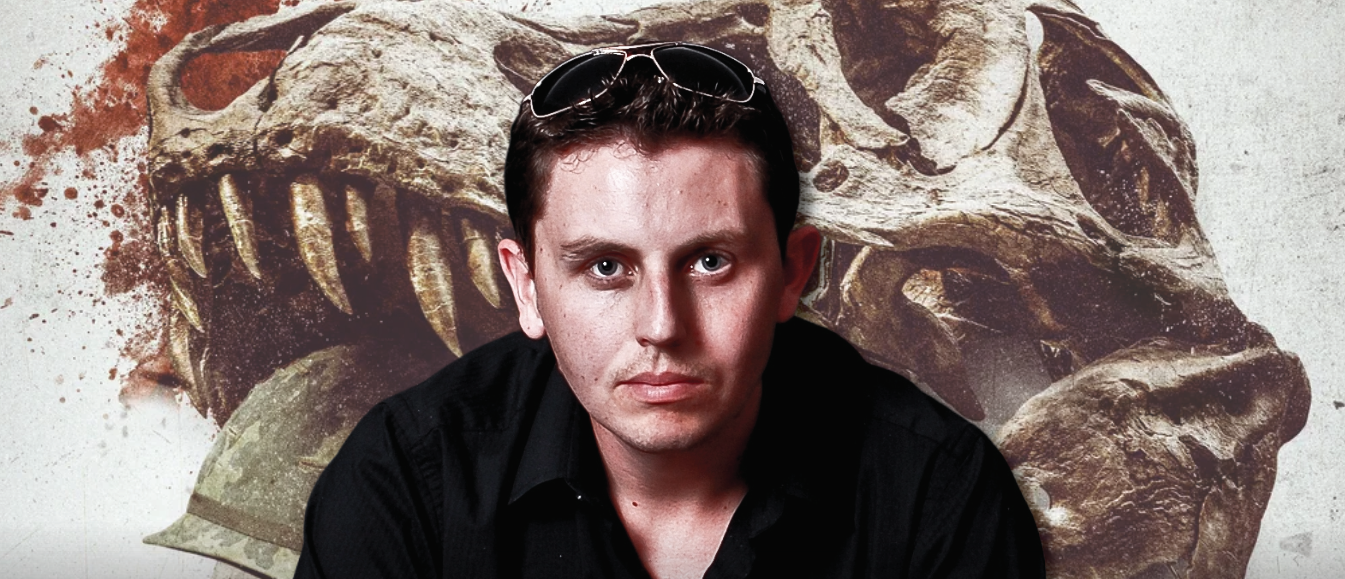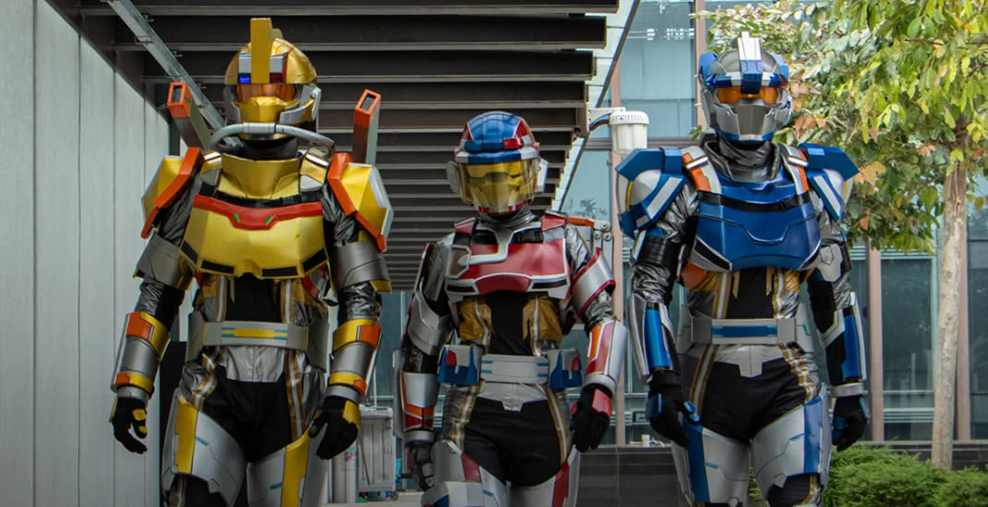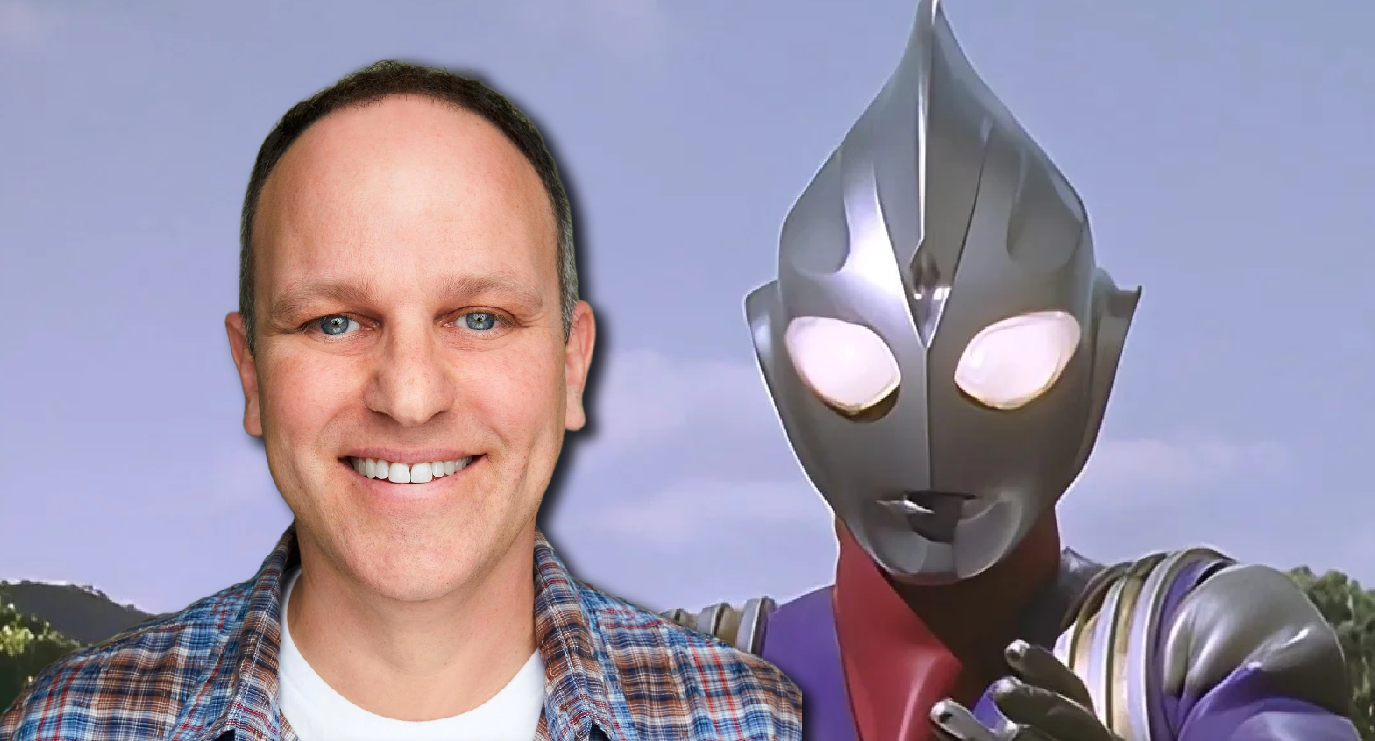
Summer is winding down and with it, the summer convention season. To help close it out, Long Beach Comic Con is bringing a weekend of pop culture excitement to southern LA County with artists, vendors, panels, and of course an extensive list of special guests. Among whom is voice acting veteran, Christopher Collet, who Ultraman fans may know best as the voice of Tetsuo Shinjoh in the 4Kids English dub of Ultraman Tiga. With and extensive resume of acting, dubbing across multiple mediums, and working as an ADR (Automated Dialog Replacement) director, Mr. Collet was kind enough to answer some questions from us, talking about his experience working on Ultraman Tiga, while giving us a glimpse into the world of his wide ranging career.
Kaiju United: Talk to us about how you landed the role as Tetsuo Shinjoh in the Ultraman Tiga dub.
Christopher Collet: I had been dubbing voices at a studio named 4Kids Productions in NYC because my best friend, Eric Stuart, worked there as an ADR (Automated Dialog Replacement) director and got me in for auditions. 4Kids was expanding at the time and so I “auditioned” to be an ADR Director, as well, and when I was hired in that capacity, I was assigned Ultraman Tiga, as my first show. Because the producer knew I was also an actor, I auditioned for several roles and wound up being cast as Shinjoh.
KU: Were you familiar with the Ultraman series or kaiju media at large before taking part in the 4Kids dub of Ultraman Tiga?
CC: I was vaguely familiar with the Ultraman series, mostly from having visited Japan a few times, both while promoting a film I acted in and later, while studying Ninjutsu. But working on [Ultraman] Tiga got me far more familiar with the Ultraman Universe.
KU: When recording the dub, did everyone record their lines together or was it all done solo?
CC: The way most shows at 4Kids were done, including Ultraman Tiga, was by bringing in the actors, one at a time, to dub only their lines. In this workflow, the ADR director plays a pivotal role, because they are the only ones who have a sense of how the entire episode fits together and are there to not only craft the actor’s performances, but to literally explain to them what is going on. An actor might have a few lines on page 5, for example, and then not say another word until page 29. So the ADR director has to fill in those blanks for them. I always felt a bit bad for the first few actors I’d bring in for a new episode, because they were literally “acting in a vacuum” since not much of the episode was recorded yet. Actors who came in later on had the luxury of playing against the previously recorded performances that I’d play back for them in their headphones while they were doing their lines.
KU: Was there anything unique about working on an Ultraman project compared to anything else you’ve done?
CC: The whole experience was unique for me because it was the first time I was directing a dub, and it was a live action show to boot. The specificity of the world of Ultraman and my naivete about that world coming into the project made it all the more unique. I couldn’t wait to get to work each week and see where the next episode would take us.
KU: When voicing Tetsuo, did you try to encapsulate what your Japanese counterpart was saying and feeling? Were there any notable changes to the character when bringing it to an English audience?
CC: I certainly studied what the Japanese actor was doing physically and tried to absorb his intentions and emotions by closely watching his facial expressions in each scene. I’m not sure how much the English version veered from the Japanese original vis a vis character. I do believe, however, that the producers intentionally leaned into the “comic” side of the show, I’m just not sure how much that skewed our version from the source material.
KU: You have dipped your toes in horror, anime/dub voice acting, live-action television, and more. Is there a genre you feel most at home in, or is it all just a part of the acting experience?
CC: I do consider it all just part of the “acting experience”. That being said, there are definitely different techniques and aspects of yourself that you must bring to each variation of performance. As an example, while recording anime, you have to be very cognizant not to “pop your p’s” into the microphone. The letter p has a very plosive sound and will distort the recording level if you hit it too hard right into the mic. Some techniques to alleviate that include approaching the mic from an angle for the “p” sound or placing a finger in front of your lips while saying “p”. If you were playing King Lear at an outdoor Shakespeare Festival, that would be the furthest thing from your mind.
KU: Are there any differences between dubbing a live-action show in comparison to animation?
CC: I think the technique is similar in terms of having to match your words to somebody else’s mouth movements, but the live action actors, in my opinion, give you so much more to work with than the animated characters do.
KU: Do you think the art of dubbing has changed since you started?
CC: The technology has certainly changed and that in and of itself has changed the art of dubbing. Back when I recorded [Ultraman] Tiga, everything was done at a studio and the actors came to you. Nowadays, the equipment has gotten so good, that many performers have studios at home and record their lines remotely. There is good and bad to that, in my opinion. It’s nice to not have to leave your house and fight your way through traffic to get to a session, but I do miss the human contact of everyone being in the same room together at the same time while recording something.
KU: What do you think is the easiest misconception people have about dubbing?
CC: I’m not sure that people have misconceptions about dubbing, but perhaps some people mistakenly believe that all projects are recorded first, then animated. This is definitely one way to do it, and 4Kids did do a few seasons of TMNT in that manner, but mostly we recorded voices to preexisting animation.
KU: During your time as a voice director, were there any fundamental tips or words of wisdom you would give other voice actors?
CC: I wouldn’t say there was any blanket advice I gave. It was usually custom tailored as a response to what I was hearing/seeing in front of me when working with a certain actor. Sometimes it was different advice to the same actor on a different day because of what I sensed they needed at that particular time. If there was any fundamental advice I gave it was something as simple as “bring a green apple into the booth with you” because oddly enough, having a bite of a Granny Smith solves a lot of the “mouth noise” microphones can pick up with certain people. Not sure why, but it works.
KU: Do you prefer directing over acting? Is directing something you’d like to explore more of?
CC: I like them both. I have explored other forms of directing having directing plays and even a few short films. I feel similarly about the different forms of directing as I mentioned I do about their acting counterparts. You need to bring different toolsets to each job, but they are all imbued with the same spirit.
Kaiju United would like to not only thank Mr. Collet for his time, but also the wonderful crew behind the scenes at Long Beach Comic Con for helping make this interview happen.