A period of Ultraman history that is not as discussed amongst the general kaiju populace as it should be is the gap between 1980’s Ultraman 80 and 1996’s Ultra franchise revival in Ultraman Tiga. Sure, there weren’t any direct Japanese Tsuburaya entries, but there were three different experimental attempts at creating an English-language adaptation for the international market. Some of these were successful in their own right, with fans having a nostalgic adoration for Ultraman: Towards the Future starring Dore Kraus, or the 1987 Hanna-Barbera and Tsuburaya Productions animated co-production Ultraman: The Adventure Begins.
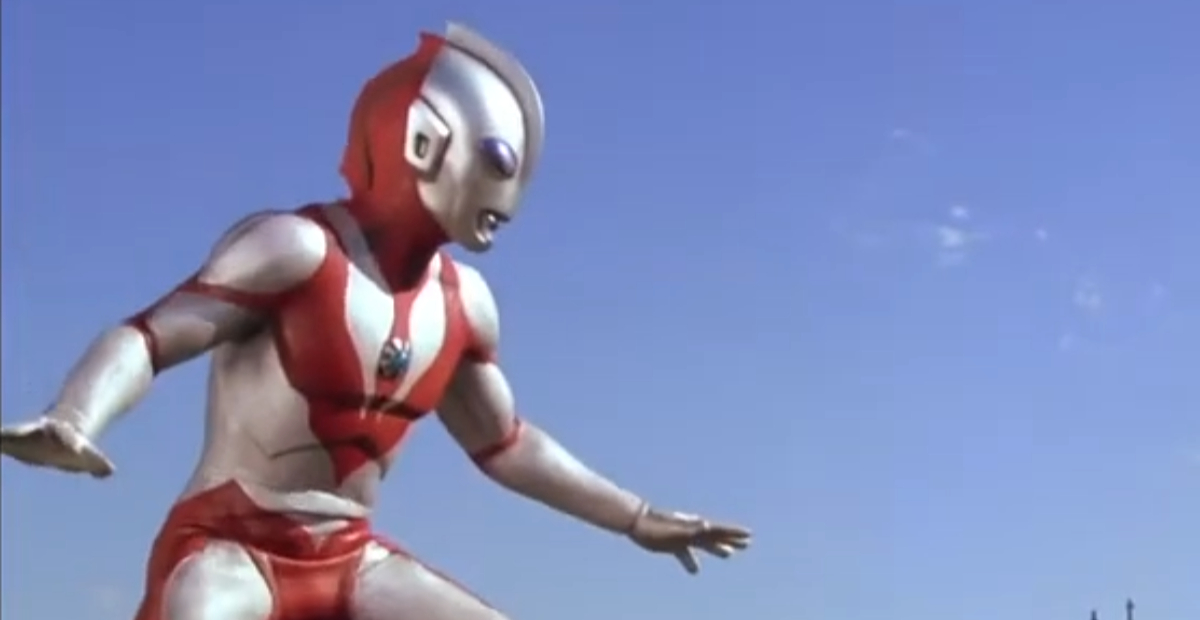
With Towards the Future hitting Blu-ray this month, I found myself venturing towards the other series it was paired with, 1993’s infamous American series Ultraman Powered, otherwise known as Ultraman: The Ultimate Hero, to see if it would have a similar reevaluation to media such as All Monsters Attack or Godzilla (1998). Unfortunately, my experience was not one of reevaluation, but confirmation that even the greats like Tsuburaya can produce an absolute dud. Ultraman Powered is a series plagued by stiff action sequences, awkward, direct-to-video level dialogue, and poorer remakes of classic Ultraman (1966) episodes. This is made all the more sadder with how great some of the updated kaiju designs and suits look, giving us a substantial amount of potential this series could have had.

©Tsuburaya Productions
As many have chronicled before me, Ultraman Powered had a rather notorious production, with the producers reportedly having to fight for more budget with every single episode. (There’s also been legends of certain producers using said budget to go on vacation to Hawaii, but I cannot confirm that.) These Hollywood production issues cause the suits to *look* great with their updated, modernized re-designs, but for them to not be light enough to give us an engaging combat scene, which is kind of the whole high point of each Ultra episode. Most of the fights in the first half of the series involve a monster shoving Ultraman Powered to the ground, with the silver giant getting back up and returning the favor, pushing the kaiju down into a building or a field. There is some grappling present, albeit very stiff and awkward grappling, but it’s clear that these suits cannot move, and that will immediately bring the entire presentation down. Trust me, it shows. I do think it is funny in retrospect that it is canonically explained in future Ultraman media that Powered fights with a sumo style, which is why it is so stiff and shove-heavy, but the fact that it had to be explained creatively shows that these fights were some of the weakest in the entire franchise.
I am traditionally fairly forgiving of tokusatsu television for showing its age throughout the decades, as for instance, it’s pretty cut and dry with Ultraman (1966) that it was produced and written in the 60’s; there’s just specific cultural norms and actions from that time you can see in the show. However, the scripts that have been written here, aside from some standout examples in the show’s third episode, A Quartet of Creatures, and the eighth episode, The Dada Effect, are quite difficult to sit through. It’s not just the strange 90’s slang that is present, but a team of defense force members are talking like they are hitting the skate park with cans of Surge later. I would understand if our titular hotshot hero, Kai (portrayed by tokusatsu veteran Kane Kosugi) was speaking in that vernacular, but it is incredibly jarring when everyone in the Science Squad talks like that. Both A Quartet of Creatures and The Dada Effect are noticeably better in not only updating the story to modern day with good twists, but also contain the sharpest scripts that eliminate most of the aforementioned “Yo, we’re in the 90’s!” dialogue that permeates the series throughout. If I were to recommend an hour of your time to digest the series, just watch those two episodes as a sampler. It’s also worth noting that Jeffrey Combs of Re-Animator guest stars in A Quartet of Creatures, giving a memorable performance as a sleazy, Carl Denham-esque film director that more kaiju fans should be talking about.

©Tsuburaya Productions

©Tsuburaya Productions
With thirteen episodes, Ultraman Powered should have been an easy breeze of a show to watch over a long weekend. I was fairly disappointed, but not too surprised, to find out that the show really is that bad. I admire Tsuburaya Productions for being bold enough to bring back Ultraman Powered as a character in modern media and honoring this period in their history, but I think there might be a reason it took thirty three years for this series to finally make it to high definition home video. For the hardcore fans & completionists that want an interesting chapter in the Ultra franchise’s history, this might be a fascinating venture, but go in knowing that it’s mediocre to so-bad-its-good throughout. If you are going to partake in well-known UItraman stories as a newcomer, please skip this one and spend your time watching the classics rather than inferior remakes.