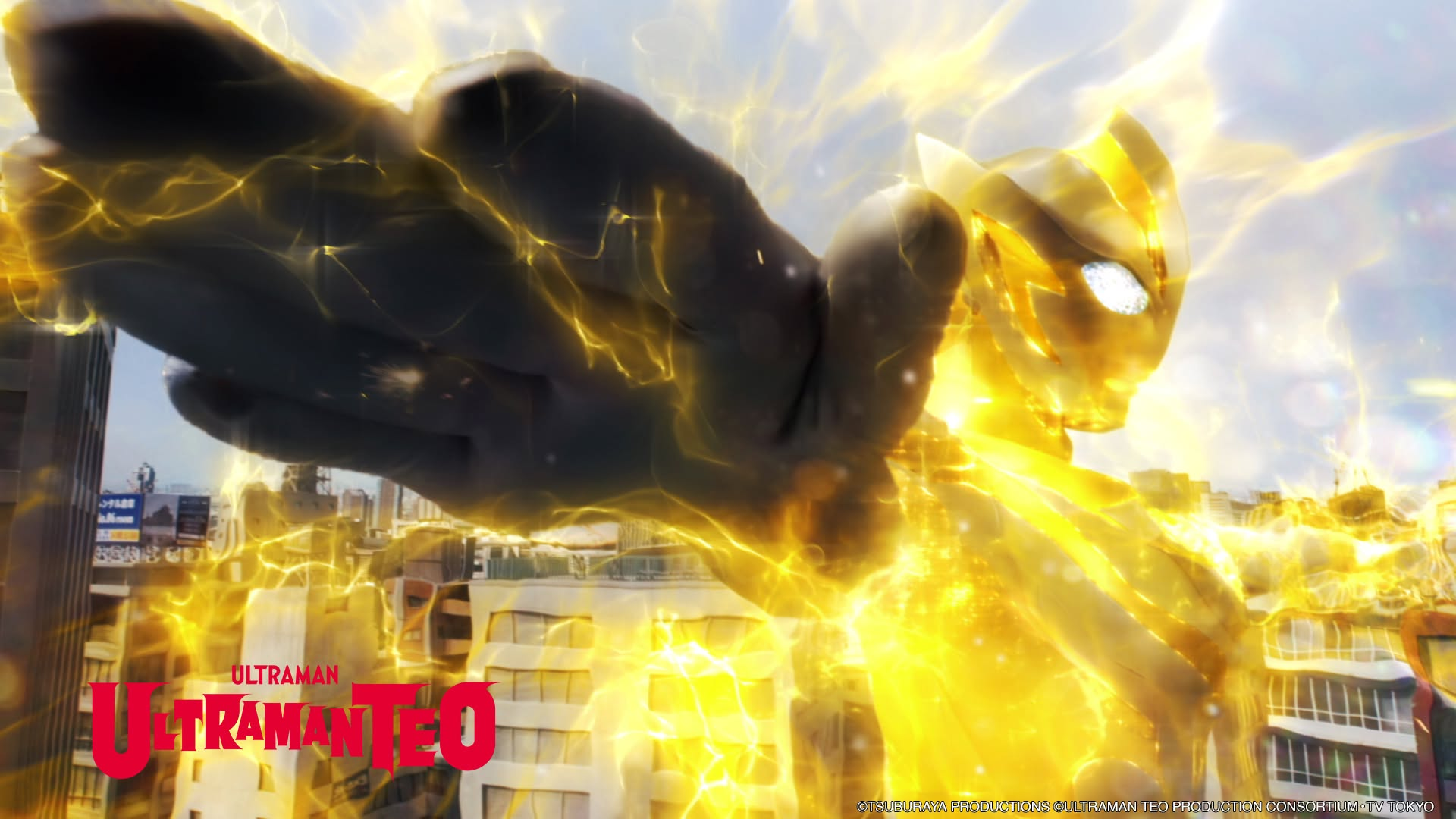
Tsuburaya Productions’ celebration of Ultraman’s 60th Anniversary is finally in full swing with the premiere of Ultraman Teo’s first episode. Not too dissimilar to last year’s Ultraman Omega, Teo kicks off with an elaborate VFX sequence in which Teo’s home planet is destroyed by a swarm of space monsters, forcing him to flee to Earth and attempt to integrate himself into human society. Disguising himself as a veterinary student, Ultraman Teo must overcome his aversion to conflict as his new home is once again invaded by the same monster that set him on his current path.
Ultraman Teo’s production is a unique aberration in that each episode is shared between two directors, with one focusing on the drama sections and another focusing on special effects. In this first episode, the benefits of this new system are already visible, with the characters and setting being given enough time and focus to breathe without feeling as if they’re being sped through to make time for the action. I personally found Ibuki to be immediately likeable, with his hesitance to jump into conflict being a very interesting subversion of a typical Ultraman protagonist. The rest of the series’ core cast make brief appearances in the first half of the episode, and thankfully seem to be written like fairly average if eccentric people, rather than one-note caricatures that New Gen Ultraman is sometimes guilty of populating its shows with. Without any of the rest of the series out yet, it’s too early to confidently say whether this style of writing has stuck its landing.

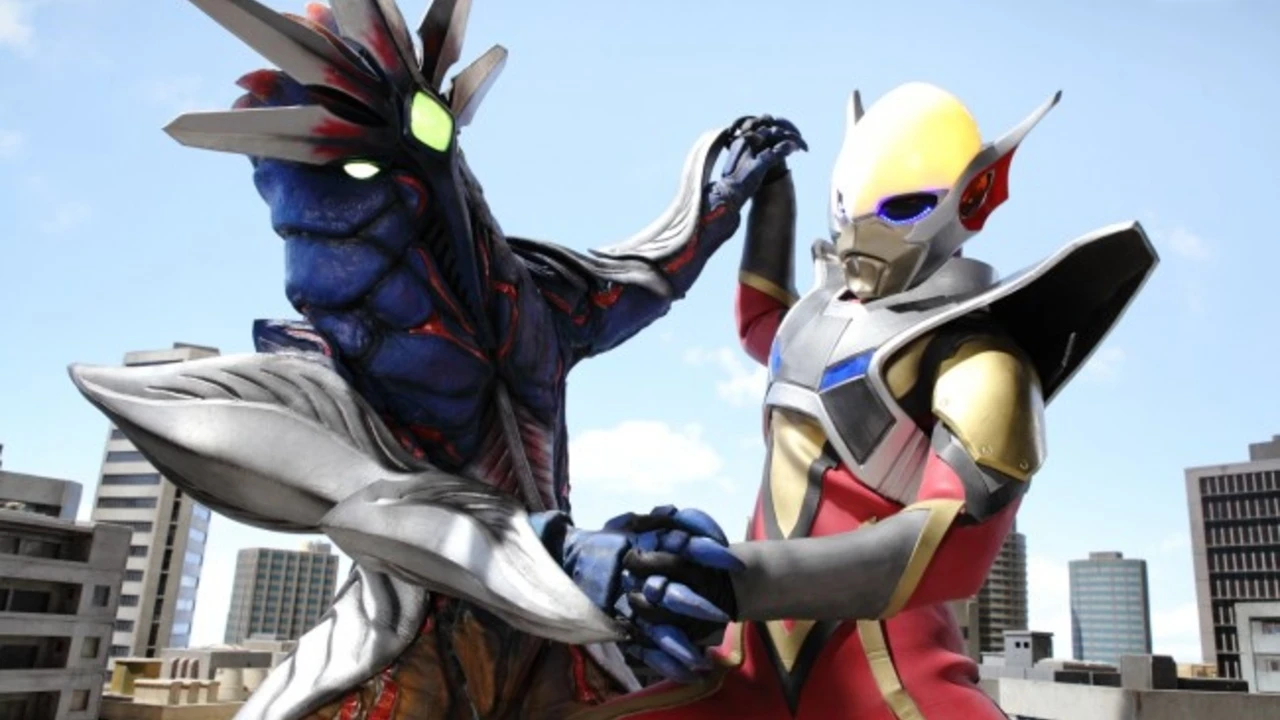
The highlight of the episode is Teo’s fight with Vialoga, one of the space monsters that destroyed his home planet. The fight itself is very snappy and dynamic, with a portion of the fight taking place entirely in the air and another being shot in a single long take. Takanori Tsujimoto, known largely as a guest director for shows like Ultraman Z and the head director of Ultraman Arc, is a fan favorite among New Generation Ultraman fans, and his special effects work definitely steals the show, notably the animation-inspired flourishes like impact frames when Teo fires his beam, or the quick cuts to give the impression of super fast movement.
While some fans may find themselves disappointed at the lack of an immediate throughline to the larger franchise’s mythos, Ultraman Teo keeping to its own cast of characters will give it more room to develop into its own entity and create its own legacy without having to depend on existing heroes to prop up its world. Ultraman Z is a widely beloved show that’s often praised for how proudly it wears the rest of the series’ legacy on its sleeve, but people are often quick to forget that a majority of the show’s run is carried entirely by its own characters and worldview, rather than the things that it lovingly calls back and pays tribute to. Ultraman Teo, at least by the point of this first episode, does genuinely feel like it wants to create its own legacy and try new things while still maintaining the spirit of Ultraman. While this direction may not be for everybody, I’m very excited to see how a more narratively-focused Ultraman series can develop without having to attempt to be something that it doesn’t need to be.