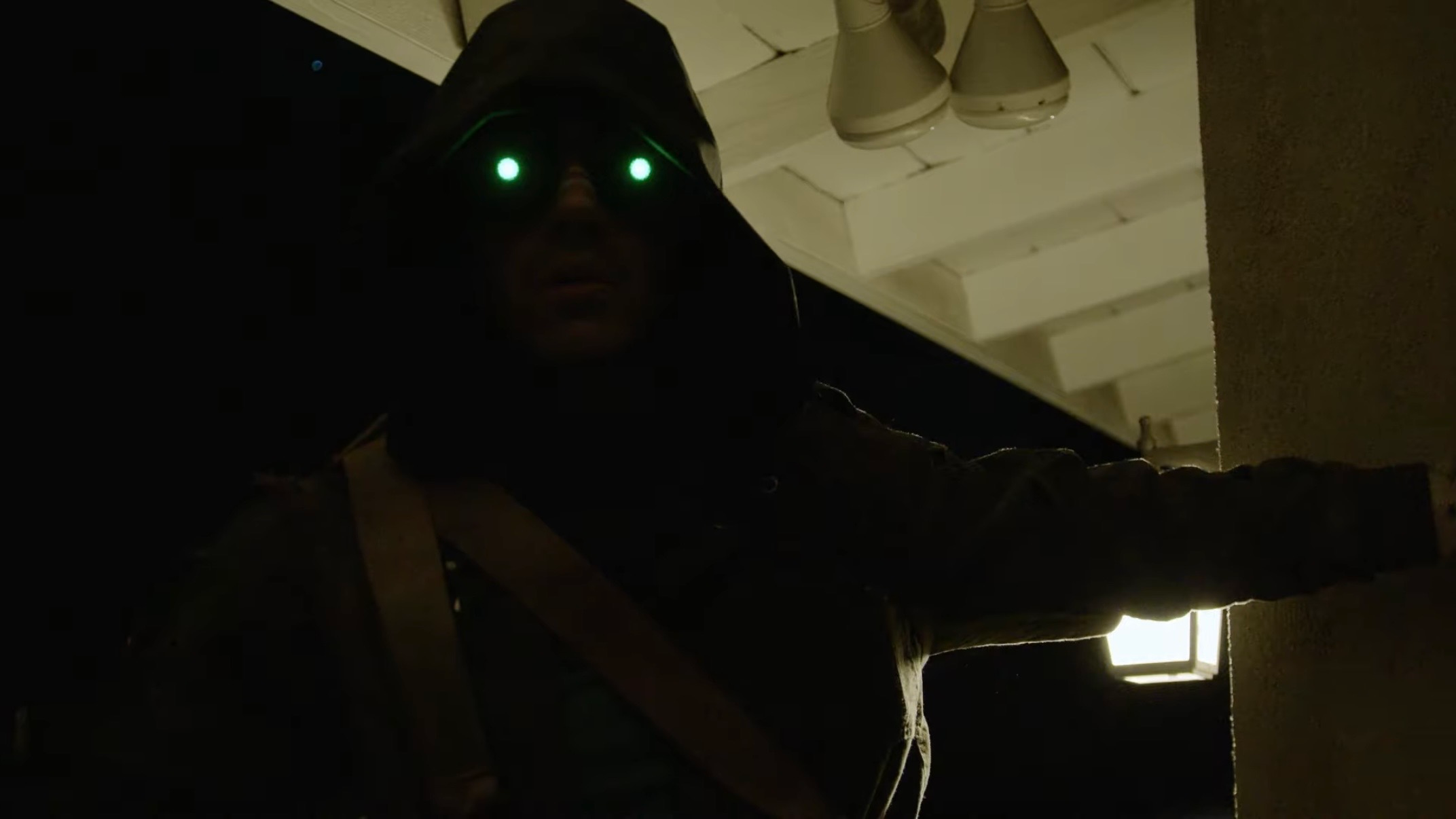
The dystopian sci-fi short helmed by Ultraman alumni Daniel Van Thomas continues to lurk in film festivals. Criddlers tells the story of societal decay and collapse, directed and written by Eliot Murray and Blaine Moir, and produced by Joe Spencer. In this interview, the filmmakers break down their love for genre fiction as a refelction of the world at large, and what audiences can expect from such a gnarly flick.
Davis Madole: Hello, ladies and gentlemen. This is Davis Madole of Kaiju United, and today I am here with writers and directors Blaine Moir and Eliot Murray, and producer Joe Spencer. How are you guys doing today?
Eliot Murray: We’re good, man!
Joe Spencer: Thanks for having us!
Blaine Moir: Yeah, thank you for having us on!
Madole: Of course! Very happy to have you guys here. I do want to congratulate you guys on Criddlers and getting it out to film festivals across the United States. I’m really looking forward to more people getting the opportunity to see this very excellent short film.

How did you all get your start making independent films?
Spencer: Well,, if you’re a fan of the movie Super 8– minus the alien, perhaps– but that was kind of us growing up a little bit. Us and a few other dudes kind of met up in the Pacific Northwest, just on the northern side of Portland, Oregon. We always kind of made weird stuff in some way or another.
Eliot used to do a lot of versions of Edgar Allan Poe’s short stories. Blaine always insisted on pushing the boundary with actually being like, “Hey guys, but what if we put the camera on top of the car this time when we moved?” We all kind of brought a little bit of a superpower to the set. We made a couple dozen shorts, a couple features. Most of it was very horror, very genre, sci-fi centric. Then we kind of all went off on our own to do our own thing and figure out where we belonged in the business.
Cut to a couple years later, and we’re all in LA. Me and Blaine here decided we wanted to make a werewolf flick, End of the Road, and Eliot came on board as our co-producer. And that’s where we met Daniel Van Thomas, the star of Criddlers. He really became our– what do you think, guys? Kind of the Bruce Campbell to our collective?
Moir: Yeah, it was fairly instant too. During casting, we had him come in for the wolf, and we were instantly like, “We need to bring him back,” for the guy who turns into the wolf. And he just instantly became part of the crew. It was an instant friendship. The dude is super likable anyway.
Don’t let him see this. I don’t want it to go to his head too much.
Murray: He is the man, for sure.
Madole: He certainly has that build and that face to him. I can easily picture him as a werewolf.
Spencer: For me, that is a compliment! I think for Dan especially, we were all looking for people to play with in the sandbox, so to speak. The guy really wanted to get into it with us. But it wasn’t just that. I think we all had that connection with him at some point. For me, it was the first few weeks of End of the Road, some years ago now, where he was just talking about, “I really want to put myself through something here… Joe, do you know Batman?” I’m like, “Yes, I do know Batman.” And it was just heart symbolized right there.
But each of us had a connection like that with him, with each other, that kind of made us this group that we are.
Moir: Yeah. He speaks the shorthand, you know? He gets it. He’s actually very much the best of both worlds. It’s almost like if Daniel Day-Lewis was an action figure, and you could just kind of put him in gold underwear and make him do strange things, and he’s just down for it. He never, ever turned down anything.
Murray: The most patient human being. The rare combo of extremely talented, just able to flip it off and be a great friend and human being a second later, and then switch right back into the darkness.
Moir: (Laughing) To just being a piece of shit, it’s amazing!
Given the material of Criddlers, a lot has happened since [development in 2023]. How did you guys deal with some of these ideas that were starting to hit a bit close to home, especially nowadays?
Murray: The germination of the idea and watching it kind of grow and develop and become this weird mirror to the world that we are unfolding before us has been a trip. The idea kind of came out of existentialist nightmares, I guess you could say. During the pandemic and around that time, the last ten years has been an eventful decade, in more ways than one. You can see pinpoint moments of the movie in reality. I was having these crazy nightmares and stuff right around the same time that Blaine and I were talking about the need to make another movie and the need to express this somehow.
We’re all from Portland, Oregon, and during the pandemic there was a crazy amount of activity happening there. There were drugs, police activity, and it really seemed like the world was splitting apart. The term, “criddlers,” the title itself, is not something that we made up. It’s a term that exists in real life. It’s a term from the Pacific Northwest, kind of a slang term for a junkie, and a particular type of junkie that crawls into your yard at night and is aggressive.
Madole: Explains a lot!
Moir: A little more aggressive-looking guy, you know what I mean? Like if you’re walking down the street and you’re like, “Oh, there’s a Criddler.” It’s very much a Pacific Northwest thing.
Murray: We’re hoping there’s a little bit of a wink and recognition for fans from where we’re from. But yeah, we were seeing these kinds of things. I was seeing these crazy strains of drugs that were hitting the streets that were really changing people’s minds. At the same time, every day there was this growing stratification. We were starting to mirror things like the Soviet Union in the 80s. I think the idea of the Criddler came out of this question: What if you put a gun in the hands of one of these guys? And what if one of these guys was also like a version of an ICE officer, and a secret police?
Then the next day, I banged out seven pages of an idea and brought it to Blaine and Joe, and we just started steamrolling, or snowballing, whatever strange metaphor you want to use.
Spencer: The strangest thing, though, is just how much, as it evolved, the reflection of society kept going. At first, the cats being illegal and worrying about the cats being illegal in the subplot, those things were very COVID-esque. But then later on, it became much more about immigration too. That’s kind of what I love about the story. Even the little lines we put in here and there, “the court collapsing,” and all that. There are always problems in America– and we’re in a very big hot spot of that right now.
Moir: Even down to the point where we had President Butros– the face in the sky, the sky daddy– and all of that. At one point somebody called Trump “daddy,” or said you should call him daddy or something at a press conference, and it was getting very strange. It started becoming stranger than fiction. We were like, “Should we stop? Is this what we’re doing?”
Spencer: I think the one thing I want to touch on before we move past that question is what we talked about at the very beginning of this whole idea of the gun itself. It’s a blood gun. And why is that? Because bullets are illegal in this world. We’re now in a society where laws are no longer about morality. Laws are there to figure out how to go around them, to justify getting around the law. If bullets become illegal, so what? They’ll figure out how to make soldiers’ blood become the next bullet.
Madole: Watching it, I took it as this symbol of self-destruction. The way the Criddler literally fuses himself with the blood gun is a form of self-mutilation, which runs parallel with this element of societal decay that’s in the short.

What made you all decide that science fiction was the genre for this story?
Spencer: We’re children of genre. We want stuff with a little bit of an extreme bite to it, whether it’s horror, sci-fi, maybe a little fantasy sometimes. I think that was always going to be that prism for us.
Blaine and Dan have this political passion. They want to show people how they feel and what the world should be. That’s always going to be a statement for them. But I think it’s a powerful thing to put in a flick. Eliot and I are very much about body horror– not to say that we all are into body horror, but you and I very much have those little asides about Cronenberg and stuff for ourselves. I think that combination of body horror with an extreme political statement is something you don’t normally see. It evokes things like Zardoz in your inner imagery or RoboCop, those kinds of movies.
Madole: I was thinking of RoboCop while watching it too, especially in how some of it was shot! You had these huge towers in suburban areas, which clearly don’t belong there, but they do in this world.
Moir: That’s good! I’m glad that connects with you.
Getting back to the impetus of it all, to break it down into a really baseline sort of thing: Eliot bought a 1983 red Porsche 944, and pulled up in it, and I thought, “We need to make something with that.” And all the things Eliot had said, all this stuff was doing, and then we just happened to have this perfect storm: Eliot bought this car, Daniel Van Thomas was moving to Dallas to do voiceover work and leaving LA, and we were like, “We need to shoot something with Dan before he leaves.”
I think I remember that day, we watched a fantastic short called Berserk, where Daniel was in a virtual reality kind of setting. And I just thought, “Oh yeah, we need to do something sci-fi with Dan.” We had done a lot of stuff with Dan– we had Dan as a werewolf, we had Dan in golden diapers as space Zardoz. We’ve done all these different genres with him, but we never dived into hardcore sci-fi with him. There was no other way to do it.
Spencer: Like what you were saying, Davis. With Dan’s look, he’s The Man With No Name. He’s Wolverine written by Larry Hama in the 90s. You wanna give this guy a license to be a gunslinger in a movie.
How did Joseph Lopez end up playing Daniel’s opposite?
Moir: We love Joseph. He’s so good. The way Eliot wrote The Source was instantly like, the second I read it, I was like, “Oh, this dude is Gary Oldman in Léon the Professional.” That’s what this feels like. He’s just unhinged, and what makes him scary is that he can go anywhere.
So we put out a casting call, and we got a bunch of fantastic actors. For the amount of people who actually responded, we were blown away because it was a very few amount of people, but all of them were hitting on all cylinders. It was a tough call, but ultimately, we decided to go with this idea of juxtaposing their size, making him a little firecracker compared to this monolith, this silent monolith that is Dan. The way that works, I think, is awesome.
Spencer: And you’re not even thinking about the size difference. It doesn’t really become a joke because Joseph has so much screen presence. Even though Dan could just– [throws a punch]
Murray: We knew, because it’s a short film, we needed somebody to come in and really deliver and give us something big. We only have so much time to work with somebody, and that was Joseph that day.
Spencer: Just to give credit to the post-production on this, we had some amazing crew members. One of them is Nikola Simikic, who handled all of our audio mixing for this thing.
We had Joseph come in, and probably, what did we say earlier, guys? Like 50 to 60% of his performance was that day in the room, bringing him to the mic to read some wild lines?
Moir: And Joseph is super in demand now. It’s very cool watching his career from the point where he was just this dude who wanted to work all the time. He came in on the day, and we were doing two or three takes max. He was just on it, rattling through the material. It was great.
Then months later, we did ADR, he came in and it was really cool to see him blossom and evolve from having done all these other roles in between that time and his approach to it. You could tell he had gotten a lot of time to think and tweak the way he wanted to do this, and it was like, “Oh, there it is. That’s sick.”
Spencer: Yeah, I think The Source’s sense of humor definitely came about in post with those weird little things we had him say. “I could do it with my dick in my fist” is my favorite.
[Everyone laughs]

Alright, just to wrap everything up, what do you expect audiences to take away from Criddlers?
Murray: We’ve always been influenced by movies that exist in two worlds. Like Joe was saying, movies like RoboCop. For one viewer, it’s a fun splatter-action, sarcastic, wild ride, which it is. But on the other hand, it’s also a very deep criticism of Reagan capitalism of the 80s, of consumption, the frailty of human life, and all this sort of stuff. It’s heavy. I think if anything, that’s the kind we’re trying to go for. You can both have a good time and live in a rich world that moves fast, like we’ve painted this whole huge quilt of stuff that we don’t dwell in and just move on.
But underneath it all, it’s based in something that the best science fiction always has: reflections of reality. It has critiques and thoughts on what’s happening, and it’s always looking forward into the future. And this movie looks forward into the future… /present? [Chuckling]
Moir: Yeah, very near future? [Laughing in a shrug]
Murray: Yeah, but I think if an audience comes away thrilled, surprised, wanting more, that is what we’re going for. We’re hoping to continue delivering more in the not-too-distant future.
Moir: Also, like Eliot said, walking away with something to chew on, where you get that surface-level Terminator 2 or RoboCop thing, and then days later you kind of ingest a little bit more in retrospect and go, “Oh yeah, there are some things there. There are some themes.” We played a lot with color, communication through color, lighting, and things like that. Hopefully that stuff just kind of seeps into people’s brains and they get to think about it and reflect on it later on.
Spencer: I think for our generation, and not just our generation, I’m talking about millennials, gen z, and the alphas sooner or later, we need to reinvent the anti-hero. The anti-hero has been recreated over and over for each generation, and we’re a society now that’s gone through a lot. We’ve been disappointed, and the generations below us are becoming more and more disappointed about what they’re seeing, what they’re having to do, and what they’re having to struggle through. So our entertainment needs to match that in a certain way.
We need to figure out a hero, an anti-hero, that has to go through a struggle that we believe is a real struggle, not just bullshit. I think Dan, as the Criddler, is that anti-hero. They have to do things they hate. We all hate certain parts of the big system, yet here we are on social media, which is part of that same system. The anti-hero has to go through that and kind of hate himself a little bit before he becomes something bigger to rise up to. I might be making a bigger statement than what Criddlers really is, but at the core, that’s what I think will make audiences like this character: how much he has to struggle to become better.
Madole: Very well put. I definitely got that sense while watching it, because not only is the Criddler angry with what he’s doing, he’s also angry about the very situation that he’s in. I caught onto those small snippets of flashbacks that reveal that he’s the way he is because of a forced augmentation. He’s trying his best to break out of this system just to experience true freedom in that sense, and I found that to be very resonant.
Moir: I was going to say– just a callout as a fan to your channel, by the way– I watched the [Kerberos Saga] video a while ago.
Madole: Oh, thank you!
Moir: Yeah, and we actually sucked some of that into the writing of the longer-form feature and everything. I think there is some of that same kind of nuance of somebody who’s part of this big machine and then has this kind of Metropolis sort of Judge Dredd feeling of, “I am the arbiter of faith” for so many people, and is that the way it should be in a personal crisis inside. And Dan is the perfect actor to take that idea and show it externally.
Spencer: What was it, we coined the term, guys, like Repo Man meets Judge Dredd?
[The others nod in agreeance]
Madole: Gentlemen, thank you all so much for coming together on this occasion. You guys did a wonderful job with [Criddlers], and I’d love to see what you guys come up with next.
Spencer: Thank you, we really appreciate it!
Moir: Thank you for having us.
Murray: Thanks, Davis.
Spencer: We’re going to need you to do some body training for Daniel Van Thomas!
Moir: That’s right!
Madole: I’ll be looking forward to that!
Criddlers marks the third feature from Murray and Moir after The Weird Boy and In Flames. The short was awarded “Best Sci-Fi/Fantasy” in Italy’s Absurd Film Festival this past May, and will continue to screen at film festivals worldwide.
For more updates, follow Unmanned Media on Instagram and Facebook.