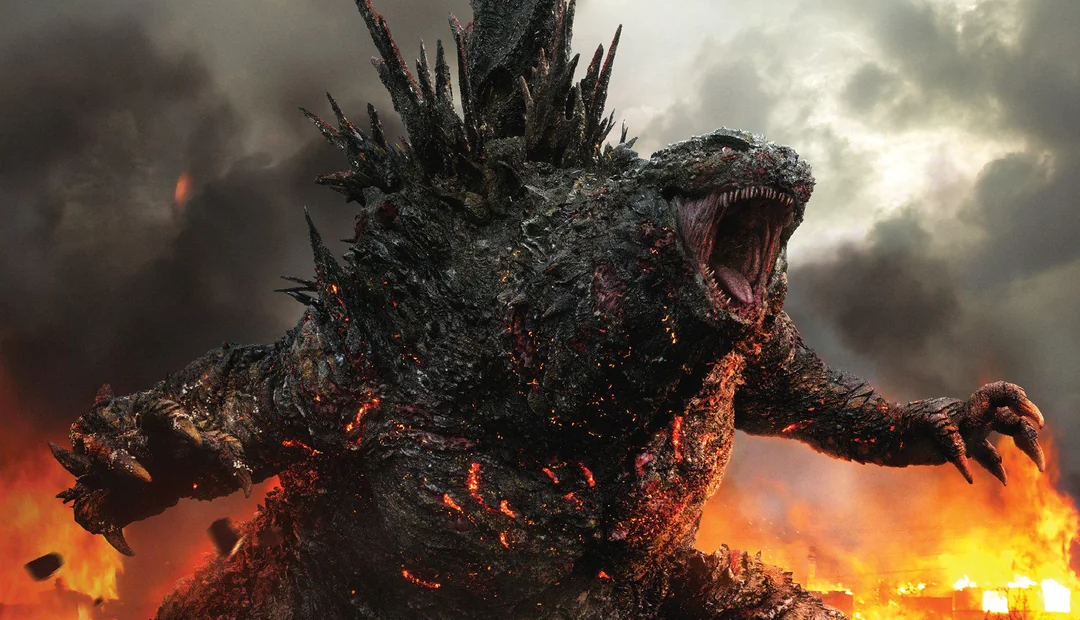
Godzilla Minus One changed the landscape of cinema. The first Japanese film to win an Academy Award for Best Visual Effects, the movie reinvigorated a franchise that has been loved by devoted fans for decades but was typically seen in a comedic light by the larger moviegoer base. That all changed with Takashi Yamazaki’s film, of which has been almost universally praised since its 2023 debut. Lightning in a bottle is one thing to call Minus One, and it is indubitably so, but it would take all the strength of the King of the Monsters in order for lightning to strike twice for the film’s sequel, Godzilla Minus Zero.
….and it certainly did.
Yamazaki’s follow-up is bigger, bolder, and wilder than the first, providing gruesome monster carnage that is some of the gnarliest in the franchise, horrific and terrifying imagery in the wake of these cataclysmic kaiju attacks, and an overall sense of dread and sadness that permeates the entire runtime. This film earns that R-Rating, in my opinion, through that imagery that will shock audiences and remind us that Godzilla’s core root is indeed showing us what war and violence and destruction do to us all, no matter who we are, where we live, or what status we hold. This level of pure destruction and horrific imagery that emerges from war or atomic weapons is something that is sanitized frequently in the modern day, but Godzilla Minus Zero does not hold back in this regard.
Let me be perfectly clear here, as well: This film shows the real brutality that would happen in a kaiju fight between two gigantic creatures, what kind of destruction would happen if an entire city got leveled, and it even goes as far as visually demonstrating what would really happen if we used nuclear weapons, something the original Godzilla film warned us about 70 years ago, but we seem to have forgotten in this day and age. These visuals are shot with dynamic camerawork, impressive cinematography, and a keen eye for the smallest detail. This is not an edgy shock value thing that will put butts in seats, Yamazaki is utilizing the medium of cinema to bring you right into the warzone that would happen in a battle between Godzilla and King Ghidorah, and it is done masterfully. The sound team went above and beyond in particular sequences to create terror, suspense, and dread, especially with our newcomer kaiju, and viewers will be blown away by how terrifying King Ghidorah is in this movie, but on a visual and sound standpoint.
Yet at its core, Godzilla Minus Zero is a deeper thematic exploration into trauma and how we as humanity process, grieve, and ultimately either conquer or succumb to it. Are we as human beings cruel to others because others have been callous to us? This is certainly an interesting topic that I believe is at the core of this film. Newcomer Min Tanaka brings immense gravity and complexity in his role as biologist and Hiroshima survivor Kanji Murakami, who is determined to avenge his family, but deeply mistrusts the government’s efforts to eradicate Godzilla. His performance echoes past tragic men of science archetypes seen in prior Godzilla films but blends Akihito Hirata’s Dr. Serizawa from Godzilla (1954) and Dr. Mafune in Terror of Mechagodzilla (1975) into an interesting character that isn’t quite a villain, but more so a deeply scarred human being with complexities and a grey moral compass, something all of us encounter and face.

Hidetaka Yoshioka returns as fan-favorite Kenji Noda, who has been bumped to main character status in this outing, and his character absolutely shines here, with a fully realized arc and journey throughout the film. Yoshioka has brought a world-class performance as another troubled man, who too has been shackled by trauma like his counterpart Dr. Murakami. Despite this, he differs from his colleague, seeking to overcome it and finally eradicate the kaiju for good and achieve peace in Japan. While Shikishima and family are the main characters we follow, Dr. Noda, quite frankly, is the heart and soul of Minus Zero. His performance stands out as a serious contender for awards season, with viewers getting a glimpse into every single emotion that he evokes as his team attempts to face these unfathomable giants.

Despite being a fantastic film, Minus Zero is not exempt from some pacing issues and strange story choices, especially near the ending of the film when it attempts to wrap things up and close out some character arcs. Some fans who are more critical of the MonsterVerse may find some scenes that were clearly inspired by those films to be a little too on the nose in terms of the inspiration, and it’s pretty clear that the MonsterVerse was an inspiration to Yamazaki and crew. That being said, I find the Academy Award-winning FX team handling some “reworks” of certain past MonsterVerse elements to be incredibly cool, and I hope they just become mainstays for both Godzilla and King Ghidorah for the franchise going forward.
Godzilla Minus Zero is jaw-dropping and awe-inspiring kaiju action that is made for the big screen experience, reminding us why we go to movies in the first place. Yamazaki and his team have promised a worthy follow-up to their Oscar-winning breakout picture, and they have not only delivered on that promise, they have created a visually striking film that delivers on the raw monster thrills, but also cements Godzilla into horror territory, which is an angle that I’ve been clamoring to see on in cinemas for quite some time. Fans are going to debate on which of the two films is better, in a way that is similar to your preference of Alien (1979) or Aliens (1986), but it is my firm opinion that both will emerge as two of the finest outings for the Big G of all time, even if Minus Zero is a clear step up with its performances, visual effects, and striking storyline.
Godzilla Minus Zero releases November 6th nationwide. We have shared no spoilers here, but we look forward to discussing the film with the community upon its release, once everyone has had a chance to see the film for themselves.