By the 1980s, Hong Kong martial arts cinema reached new heights, with stars like Jackie Chan and Sammo Hung becoming household names, ushering in what many hail as the subgenre’s Golden Era. Additionally, many of these features began leaning more toward comedy to contrast earlier years, which focused heavily on wuxia and more violent elements. Jackie Chan’s magnum opus, Police Story, perfectly represents this period of high-octane action films that could balance intense stunts with humor. Around the same time, the “girls with guns” subgenre rose in popularity, featuring women in lead roles often associated with masculine action heroes and challenging traditional gender norms, following in the footsteps of earlier martial arts icons such as Feng Hsu, Cheng Pei-pei, and Angela Mao.
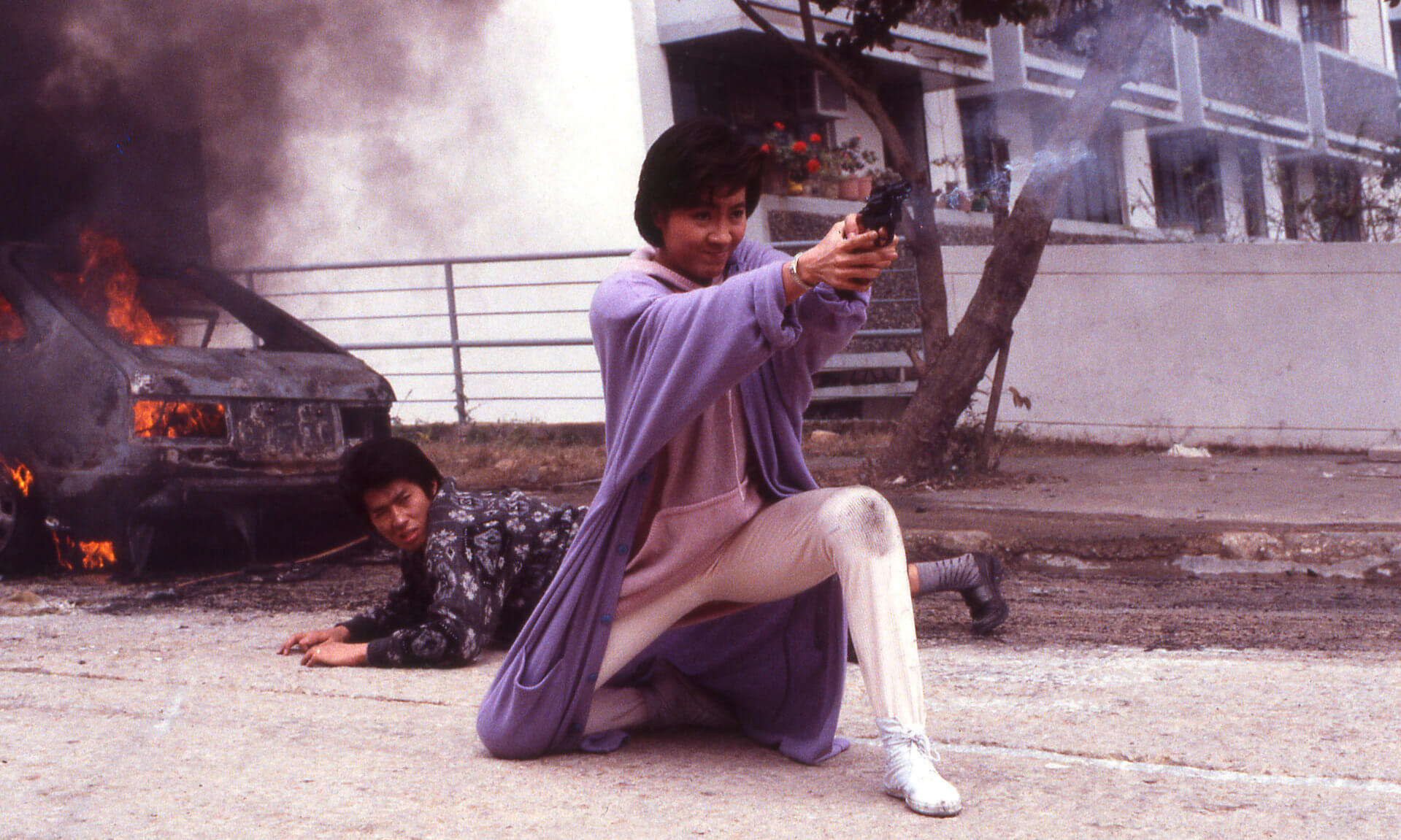
Corey Yuen’s Yes, Madam!, widely considered the first of this type of film and the launch of the In the Line of Duty series produced by D & B Films, proved groundbreaking and a major hit, kickstarting the careers of Michelle Yeoh and Cynthia Rothrock, who, like their male counterparts, quickly became household names. Following this success came David Chung’s Royal Warriors, which took a much darker, more gritty approach, adopting a more serious tone to distinguish it from its lighter, comedic counterparts of the time. The payoff is a film that not only further solidifies Michelle Yeoh as an action star but also delivers a high-octane, crowd-pleasing experience with genuine emotional resonance.

For the plot, we follow Hong Kong police officer Michelle Yip, who, while flying back from Japan, thwarts an airplane hijacking attempt with the help of retiring Japanese Interpol agent Peter Yamamoto and air security guard Michael. After two of the hijackers are killed during the failed takeover, the surviving sworn bloodbrothers of a group of Vietnam War veterans vow revenge against the heroes for the deaths of their comrades. Things only further escalate after Yamamoto’s wife and child are murdered. As the danger intensifies, Michelle rushes to track down and locate the culprits before she and her partners are picked off, and before more innocent lives are caught in the violence.
Starkly contrasting with its more light-hearted and comedic predecessor, Yes, Madam!, Royal Warriors, while not afraid to go over-the-top with its action and setpieces, doubles down on grittiness and leans into the drama, while remaining more restrained in its humor and focusing more on emotionally driven storytelling. As the second entry in the In the Line of Duty series, it still aims to entertain the audience with its spectacular martial arts and stuntwork, but this time with more of an edge, adopting a darker tone and a more relentless pace. This shift in style and direction grants the film a distinct identity within the girls-with-guns subgenre and cements its place in Hong Kong action cinema. Moreover, it serves as a subtle Sino-Japanese cultural link that is surprisingly nuanced, given the broader lingering historical and national tensions between mainland China and Japan.
The primary thematic undercurrent persisting throughout Royal Warriors is the grim yet realistic idea that the cycle of violence spares no one. Whether directly inflicting harm, acting in self-defense, or merely caught in the crossfire, no one comes out unscathed when violence takes hold. With that, the damage can extend beyond literal physical pain, as the psychological trauma can drive individuals to pursue vengeance, perpetuating an entirely new cycle in the process. Ultimately, the camaraderie between the three leads helps them pull through one horrific scenario after another.

Michelle Yip handles her job as a dedicated officer with detached precision while maintaining her belief in upholding the law. Beneath her composed exterior, her internal frustration gradually pours out as she puts up with the blatant sexist ideals of the male-dominated society she navigates and operates in. But she continues to persevere through professionalism and resilience. Michelle sympathizes with her partner, Yamamoto, following his devastating personal loss, yet tries to remain neutral as she is committed to her duty. However, as the passive corruption and incompetence within law enforcement reach a breaking point and she, too, experiences tragedy, she is forced to take matters into her own hands not only to ensure her survival but also to prevent further casualties.
Throughout it all, her feminist resilience while maintaining her place as an emotional anchor in the story makes Michelle an incredible lead to root for. She is strong yet also allowed to be vulnerable. Her character really grants this film much of its emotional power, and Michelle Yeoh delivers a tremendous performance that would lay the groundwork for some of her later roles.

In contrast, Peter Yamamoto is a seasoned agent who is ready to retire and leave behind the dangers of his work to be with his family. However, when tragedy strikes and leaves him consumed by grief and completely abandoned by the very authority figures who recruited him, he is forced back into the profession. Only now, it is for something intensely personal, so much so that he is willing to take more dangerous measures. This includes an intense shootout at a nightclub while innocent patrons and his two comrades, Michelle and Michael, are present and become directly involved in the chaos.
As the film progresses, Yamamoto becomes increasingly stoic and hardened, evolving into a vigilante driven by loss. Despite that, he never loses his humanity and remains a man shattered by tragedy, allowing the audience to continue to sympathize with him. He’s an intense presence, but emotionally grounded, and it helps that Hiroyuki Sanada gets the opportunity to shine here in one of his earliest major international roles.

As for Michael, arguably the most polarizing of the protagonists, he has also endured terrifying ordeals yet retains a happier-go-lucky demeanor than his comrades. After meeting Michelle, he frequently pursues her romantically, but to no avail, as she turns down his advances. His comedic attitude and persistent flirtation with Michelle, which, thankfully, never oversteps the boundaries, even if it borders on creepy, could be seen as a hindrance to the film. Even so, Michael possesses redeeming qualities, as he proves himself competent at his job and displays genuine bravery with selfless intent.
Despite his naivety, it’s clear Michael sincerely cares about Michelle and Yamamoto. If anything, he truly shines most in the latter half of the film when harsh circumstances force his character to come to terms with reality and undergo a more dramatic shift. It’s surprisingly multilayered, and Michael Wong deserves praise for the way he handles the material.
The villains, a gang of Vietnam War veterans tied to organized crime, are depicted as over-the-top, but still legitimately dangerous and credible threats in the story. The fact that the four are individuals shaped by trauma and loss, which adds a tragic dimension to their backstory, with their sworn brotherhood keeping them from ending it all. Nonetheless, the movie never excuses their brutality towards innocents, as their actions cross a line beyond redemption. Of the four, the standout is the ring-leader, Bandana. With his intimidating, cold-blooded demeanor, Pai Ying effectively sells the character as a terrifying force of nature.
Besides being a stellar hard-boiled crime thriller, Royal Warriors excels with its action spectacle. The martial arts choreography is remarkable, all the more commendable given that actors, including Michelle Yeoh and Hiroyuki Sanada, performed their own stunts. In general, the staging and execution of these sequences in their respective set pieces are consistently thrilling to watch, elevated by the dynamic cinematography of Derek Wan Man-kit and Ma Chun-Wah. Romeo Diaz’s music score is distinctly ’80s while appropriately complementing the movie’s gritty tone.
For viewers looking for a 1980s Hong Kong martial arts film with spectacular action and a darker edge, Royal Warriors delivers on all fronts. It’s an exhilarating viewing experience, yet one with genuine dramatic weight and a nuanced cross-cultural communication angle.