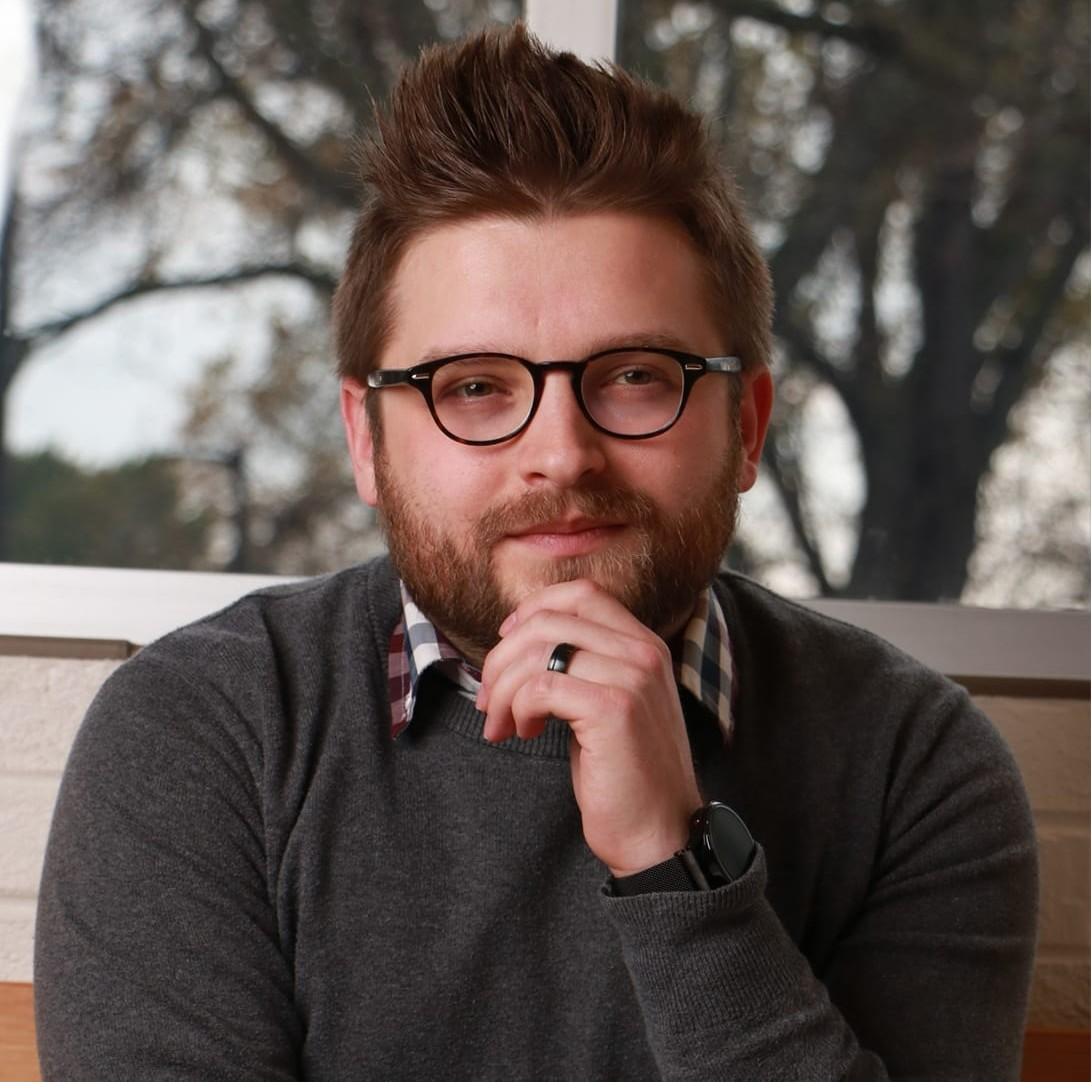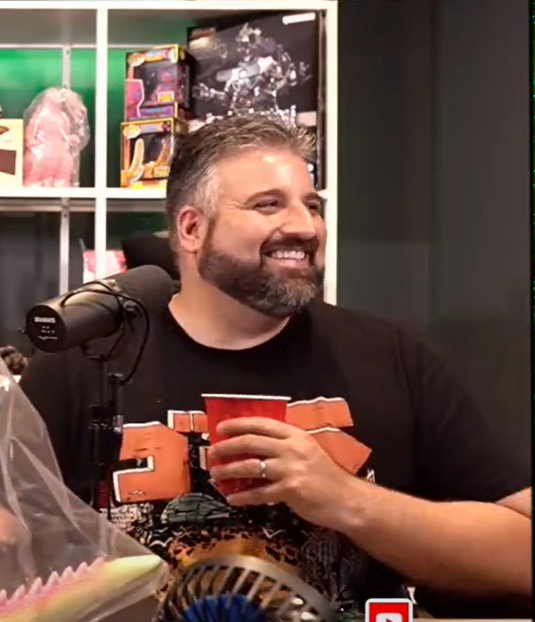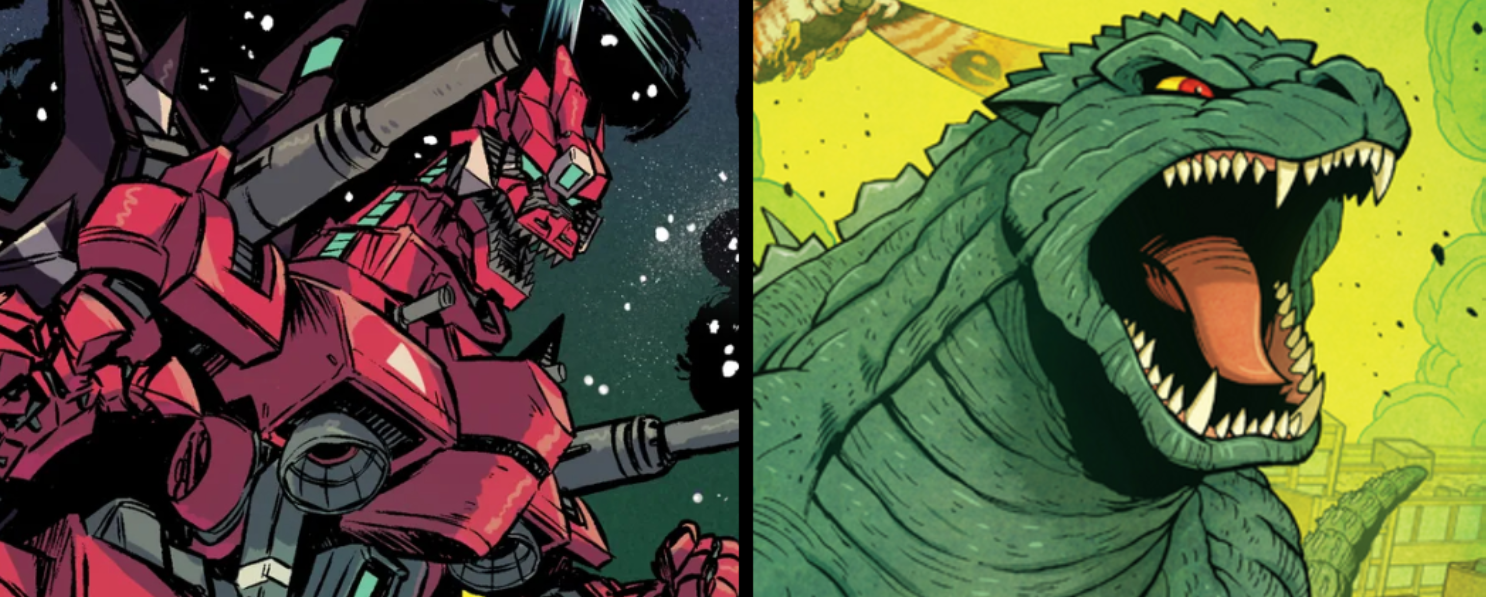
The next phase of the Kai-Sei era is set to debut today alongside the third issue of Sonic the Hedgehog x Godzilla. While both comics feature the King of the Monsters, each title is vastly different in tone, style, and presentation. The artist for Starship Godzilla, Oliver Ono, and the writer behind Sonic x Godzilla, Nick Marino, made an appearance at New York Comic Con this past weekend to promote their new releases. Kaiju United had the opportunity to catch up with both, diving into their new titles, some of the processes that go into making comic books happen, and their shared past in the form of Monster Island Summer Camp and Godzilla: Rivals.
Kaiju United: Hello, KU! I’m here with Nick Marino and Oliver Ono. Thank you both for joining me today. How are you guys doing?
Nick Marino: Excited! Oliver just got in this morning. Earlier, we had a signing [together]. Lots of really wonderful people that took time out to say hi to us! That’s maybe one of the best parts of what we do.
Oliver Ono: Yeah, I love it! It [the signing] was a great time. Really good. The job is so often very hermetic and isolating, so it’s always nice to get in front of people that know what you’re talking about.
Nick Marino: Making comics can be incredibly solitary, but what’s wonderful about the convention atmosphere is when you’re a professional, you get to see sort of the same joy and excitement you put into your work reflected back at you from people who find that in the work.
Oliver Ono (to Marino): That really fuels me for the rest of the year.
Nick Marino: It’s such a rejuvenating experience to be able to see that – [for me] it’s the excitement and enthusiasm, and also getting to know people, where they’re from, and why they care about these characters. It’s special!

TM & ©Toho Co., Ltd.

TM & ©Toho Co., Ltd.
©SEGA
Kaiju United: You both worked on Monster Island Summer Camp together. How important is that collaboration process? How much back and forth goes into that collaborative effort before you can come to a final decision?
Nick Marino: Well, with that one [Monster Island Summer Camp], I had more of a support role. So really, Oliver [Ono] was taking the lead, and I was following his instructions in terms of how to how to lay down that first layer of color on his work. But we were very collaborative. We were in constant contact throughout the process and exchanging a lot of ideas.
[In the story], when we’d go to a different location, we’d decide, “What is it going to look like? What’s the light going to feel like in this place?” I will say that the one thing that didn’t really ever change on my end, is when I’m flatting the characters, they have a consistent palette, and it’s up to Oliver to decide how he wants to bend that palette, based on whatever kind of collaboration we’re doing with the setting.
Oliver Ono: Monster Island Summer Camp was my first time working with anybody else on my art, at all. The smallest portions are the first things that you can kind of start to delegate out. At the same time, any time that anything touches another person in the process, it’s going to be additive. There was plenty of stuff that Nick [Marino] put in that that was his initial idea and what he felt. And I was like, “That’s wild and I love it. Let’s go with that!” I think it was a good time!
Nick Marino (to Oliver): It was really difficult. Your art is not that simple to flat, because you have a very detailed, expressive style that requires… you got to build some shapes on Earth. (laughs) And I don’t have a streamlined process because I write, mostly. But, you know, it was fun to be able to do that and share in that. And then we got to take that book so many cool places.
Oliver Ono: I think a lot of time, you come into something and you’re like, okay, well, just fill in the color. It’s like a coloring book at that point. But it’s very much not that way from that point forward.
Nick Marino: At that time, it would take me about a day to do every page; it was really hardcore, but fun. I was keeping a crazy schedule, staying up until like 3 or 4 in the morning, and then I just couldn’t get in the mindset to work until it was like 10 or 11 at night. And then I would work for those weird like late night hours, you know? So it was unforgettable, that’s for sure.

TM & ©Toho Co., Ltd.

TM & ©Toho Co., Ltd.
Kaiju United: You both also worked separately on Godzilla: Rivals. Were there any lessons or strategies that you took from working on that title that you implemented later in your work on Sonic and Starship?
Oliver Ono: My Rivals book was also my first published comic, like… ever. I know it’s a crazy thing to have your first thing being like, “Okay, you get to draw Godzilla.” (laughs)
Nick Marino: Even though we didn’t work on it together, we were in the same room when it was being designed. My ex wrote both that and Monster Island Summer Camp, and we used to start by meeting in person. So, we would either drive up to Oliver in Little Tokyo or he would comes down to us in San Pedro. And so that was a really interesting, fun experience, because you don’t always get to make comics with people person to person.
Oliver Ono: It continued to be additive from that point, on a micro scale. Like, I’ve kind of kept in every Godzilla thing that I’ve ever done – this is not canon or anything official – but one of the characters will always wear the same brand. The same logo that’s on the kid’s shirt in in the very first thing that I did is also the first thing that Rumiko wears, and the same logo is that is on the spacesuit leg short things that Ann’s wearing in Starship Godzilla, too. So there’s kind of an internal clothing brand that all these characters are wearing, which I think is kind of funny, in a very literal way.
Since Rivals and up to now, I was really concerned initially with trying to like, carve my own path for Godzilla. And if you compare it to most of the other Godzilla: Rivals books at the time, it definitely like looked a lot different than most of the other issues of that run. And I think as I’ve gone, I’ve gotten a little bit more confident in being able to believe that whatever I carve out – without being so intentionally different from like, the Godzilla design, I want it to be my Godzilla design, too – it’s like, I don’t necessarily have to do that as hard, and it still reads. I think, without me trying to switch it up so hard, I think it makes everybody happier. And I think it makes a better overall product for myself.
And now it’s boiled into like getting the design whole new kaiju in Starship Godzilla: Invasion X, and I’m feeling the ultimate thankful for getting to have the trust to do that.
Nick Marino: My rivals assignment was very different from Oliver’s. When I was offered the opportunity to work on my story, which was the eighth in the series, they were like, we’ve done too many Godzilla issues; we need you to make sure that your kaiju aren’t Godzilla, and it’s gotta be Heisei era kaiju.
As much as I love doing it and the collaboration, Godzilla: Rivals’ biggest legacy is going to be the way I’ve rooted it in location. I really took on the challenge of making Pittsburgh a focal point in that story and building the entire thing around the city. Hilariously, I started pitching Sonic X Godzilla a couple months after I finished my script for that. And it took us years to get there, about two years. But eventually they said, “Can you use Station Square?” And when they said that I was like, “Oh, my God. I’ll just do it like I did with Biollante vs. Destoroyah in Godzilla: Rivals, and I will build a map in my head and choreograph the kaiju out.” So for me as a storyteller, it was a really valuable experience to have that initial version of the story that was set in a city where the city had to take on personality.
Kaiju United (to Marino): For Sonic x Godzilla, how were you able to balance out the tones between the two vastly different franchises?
Nick Marino: I think, honestly, that the question is… have I? Because that’s not necessarily for me to say. The way I approach it is, is that I just think each character that’s on the page needs to have special moments. Knuckles needs to punch something, okay? Godzilla needs a Skreeonk. Mothra needs to be flapping those wings and doing a wing clap. When you are focused on giving them the spotlights to show what they do best and what people love about them, I feel like the balance naturally happens. I know some people have felt we didn’t bring Godzilla in early enough – that actually wasn’t my choice – but I love that you saved Godzilla for this, because it feels like when you’re watching one of the movies and Godzilla shows up after 45 minutes and then starts to kick butt. It’s rewarding!
I go to the wikis, I study what moves feel appropriate for an action scene, and I write the actual move into the script, and then I often reference it back to the wiki or to an image, so my collaborator knows what I’m talking about. Because I don’t assume they got it; there’s so much that an artist has to do, I’m not going to assume that they’ve got the time to go through and Google every little thing. They’re going to find reference, but I want to contribute. But balancing that with Sonic characters, I don’t go through and say, “I’m going to put a specific Sonic move in.” More often, it’s closer to, “I’m going to find a moment for Sonic to be sassy. I’m going to find a moment for Tails to be smart. I’m going to find a moment for Amy to be optimistic and courageous.” It’s about finding those little things that those characters sell the most and always showing them. I feel like for me, I see a balance there, at least in the way that I wrote the scripts; it’s about the way we spotlight everybody.

TM & ©Toho Co., Ltd.
Kaiju United (to Oliver): Regarding comic books being almost like a movie, how important is it for an artist to understand what the writer’s intentions are and how many drafts do you go through until you reach that final bit?
Oliver Ono: By the time it gets to me, the script is pretty much going to be the final one. We normally have a meeting at the beginning of each run, so it’ll be like, “Hey, what do you want this too look like?” Luckily, I’ve been absolutely blessed with really great writers that are interested in hearing out what everybody else in the creative process wants. Usually from my experience, they’ll say, “What do you really want to draw?” Is there anything you’re excited about in in this next thing?” And then, a lot of the time, they tailor a lot of those parts to what you’re currently vibing with. Because as an artist, you have to be interested in the thing you’re drawing. Basically, you have a first round where it’s super collaborative, where you’re really putting together the overall thing that we’re doing for this next project. Then the writer gets to work, trying to put fill in all the blanks and put it all together and make it cohesive. By the time it gets to me, it’s, you know, what would be like a “final draft,” right? Almost every script that I’ve ever gotten has been like, “Hey, if anything in this you feel like should go this way or that way, or switch up that or whatever, then just do it and don’t even ask me.”
I’m also very similar to Nick. I’m a person that wants to like deep dive into the attack list of each thing. There’s only so many times that you can show, like, Godzilla tail swiping this object. Okay, but there are other things and abilities that Godzilla can do. And especially with the mecha ones, there’s like ten different weapons that each of these Mechagodzillas have. With the Kai-Sei stuff, there isn’t everything. The only thing that’s canon is what we put on the thing, which is great. There are other things that the publisher would like to keep. I specifically made the move to have the Mechagodzilla in Starship Godzilla shoot the rainbow cannon.
Kiryu typically doesn’t do that, right? So, I wanted to do the blend, mostly because the initial idea for the final battle was that Mechagodzilla shoots the rainbow cannon into the crystals of SpaceGodzilla, and then it refracts like a prism, with the colors all separating. I thought that’d be cool. So giving Kiryu that ability was all in service of getting to draw that. I guess what I’m trying to say is, once it gets to the final pass and I’m actually drawing it, there will be things that I might switch up where it’s like it won’t necessarily change the narrative, but it will make it feel correct to me, and I feel like it’ll visually pay off in a way that I think would be, like, really satisfying.
Nick Marino: I like to write in weird moves too, and be like, “I don’t know if we can use this.” For our third Sonic x Godzilla issue that’s dropping soon, I was thinking about this… the way Oliver was mentioning it, I had used some eye beams that don’t have a name. They’re like blue electricity, basically, that comes out of Mothra’s eyes, and the fans caught it right away on the preview pages. They were like, “What is this move?” And I was like, “Well, it’s only been used one time in one panel in Godzilla: Rulers of Earth.” It’s inspired, I believe, by the old NES game where Mothra fires beams from its eyes. But the beams aren’t blue in that game. They’re red. Toho didn’t say no, they’re very cool about letting us try things right now. They want us to really take a chance. They don’t want you to deviate from the lockdown elements of a design as long as you stick to that. (gestures to Oliver) And that’s harder on you guys as artists than it is for us as writers, I think.

Art by Jack Lawrence
TM & ©Toho Co., Ltd.
©SEGA
Oliver Ono: Yeah, I mean, again, it’s been strangely relaxed, but it took a long time to build up to get the trust that I feel like I now have.
Nick Marino: We definitely have that. And it’s really nice to feel trusted by Toho in that regard.
Oliver Ono: I’m very thankful for the position that we have found ourselves in.
Kaiju United: Nick, Oliver, thank you so much for your time.
Sonic the Hedgehog x Godzilla, written by Nick Marino, is currently ongoing. The third issue of the series will be available at comic shops on October 14th, with the final-preorder cutoff date for the fifth and final issue in the miniseries being on November 2nd. Oliver Ono is set to begin the next chapter in the Kai-Sei Godzilla world with Starship Godzilla: Invasion X, which is also set to launch on the same October 14th day. Stay tuned for our review of Invasion X and more on Kaiju United.